


Personal Finance

Home Personal Finance
Personal finance advice and guides

Emergency Fund vs Savings Account: What’s the Difference and Why It Matters

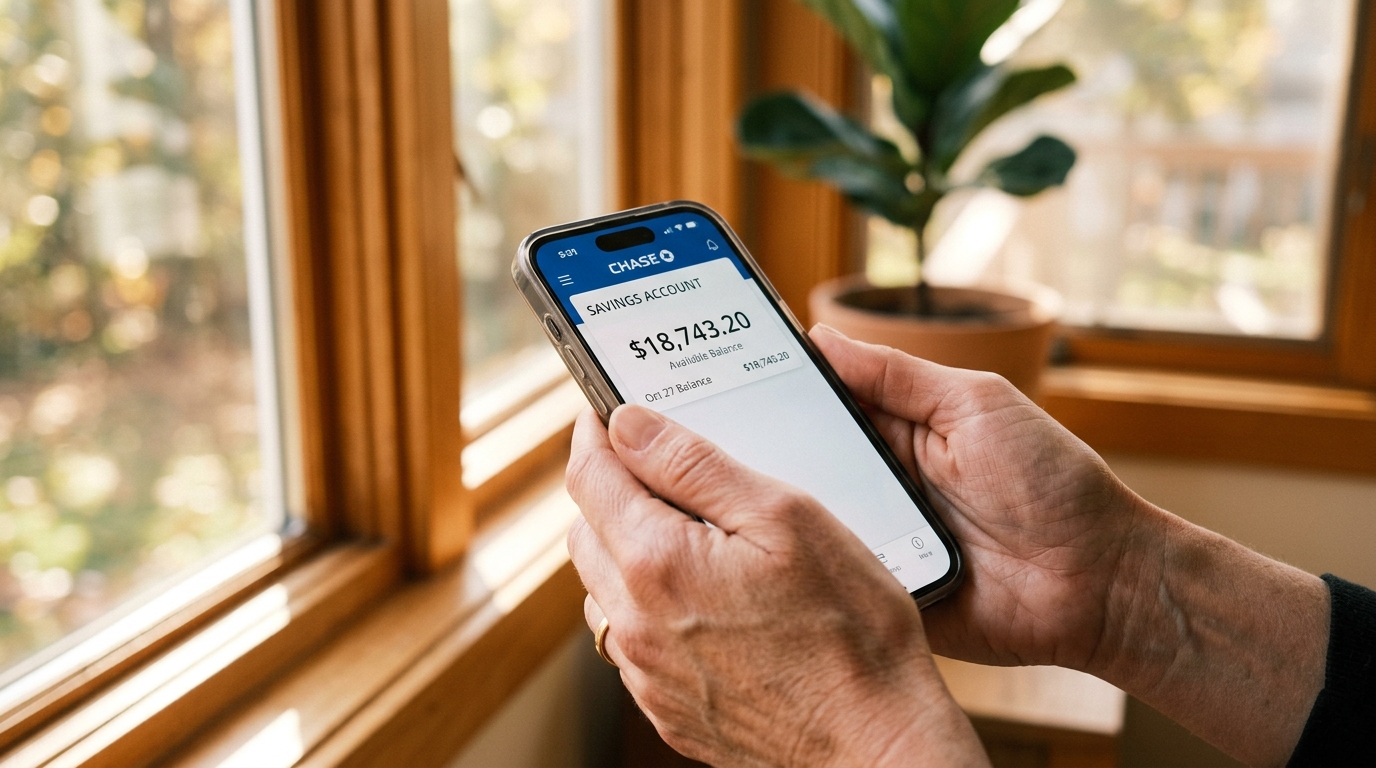
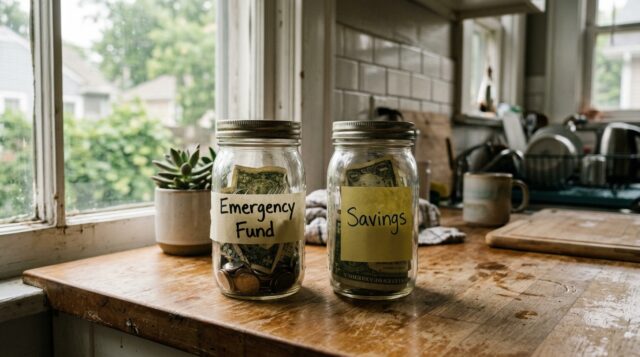
emergency fund vs savings account labeled jars or phone banking app

Most people who feel like they have savings still end up in debt when something breaks. Not because they didn’t save. Because everything lived in one account with too many jobs.

The emergency fund vs savings account question sounds simple until you try to answer it with your own money. Both can live in the same type of account at the same bank. But they serve completely different jobs. When you treat them as one pile, the emergency fund always loses.

THE CORE DIFFERENCE

Emergency Fund vs Savings Account: The Core Difference

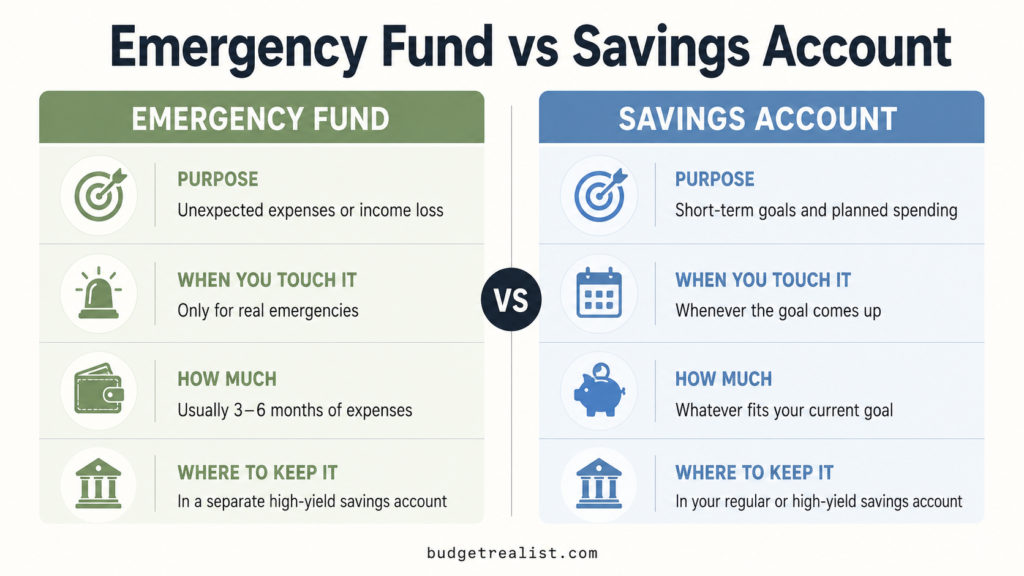
An emergency fund is money set aside for unexpected expenses that could otherwise break your budget. Job loss. A medical bill insurance won’t cover. A broken furnace in January. A car repair that can’t wait until payday.

The defining characteristic is that it sits idle until something forces you to use it. You’re not growing it toward anything. You’re not earmarking it for a trip or a couch or a down payment. It just sits there doing the boring but essential work of making sure one bad week doesn’t become a debt spiral.

A savings account is a vehicle, not a purpose. It’s where you park money you’re not spending right now but plan to spend eventually. A vacation in eight months. A new laptop. A security deposit. Whatever the goal is, it has a name and a timeline.

That’s the real difference in the emergency fund vs savings account debate: one is reactive, one is proactive. Emergency fund money waits for something to go wrong. Savings account money is building toward something specific.

According to a U.S. News 2026 Financial Wellness Survey of 1,216 Americans conducted in January 2026, 43% of Americans couldn’t pay for a $1,000 emergency expense with their savings. A separate June 2025 Empower study found 1 in 3 Americans have zero emergency savings. And Bankrate’s Emergency Savings Report, based on December 2025 polling, found 29% of Americans carry more credit card debt than emergency savings.

That last number is worth sitting with. Nearly a third of Americans are one car repair away from putting it on a card at 22% interest.

WHY THE CONFUSION HAPPENS

Why the Emergency Fund vs Savings Account Confusion Happens

Both can sit in the exact same type of account at the same bank. A high-yield savings account works for both. The separation is in how you label the money and, more importantly, what rules you apply to each pile.

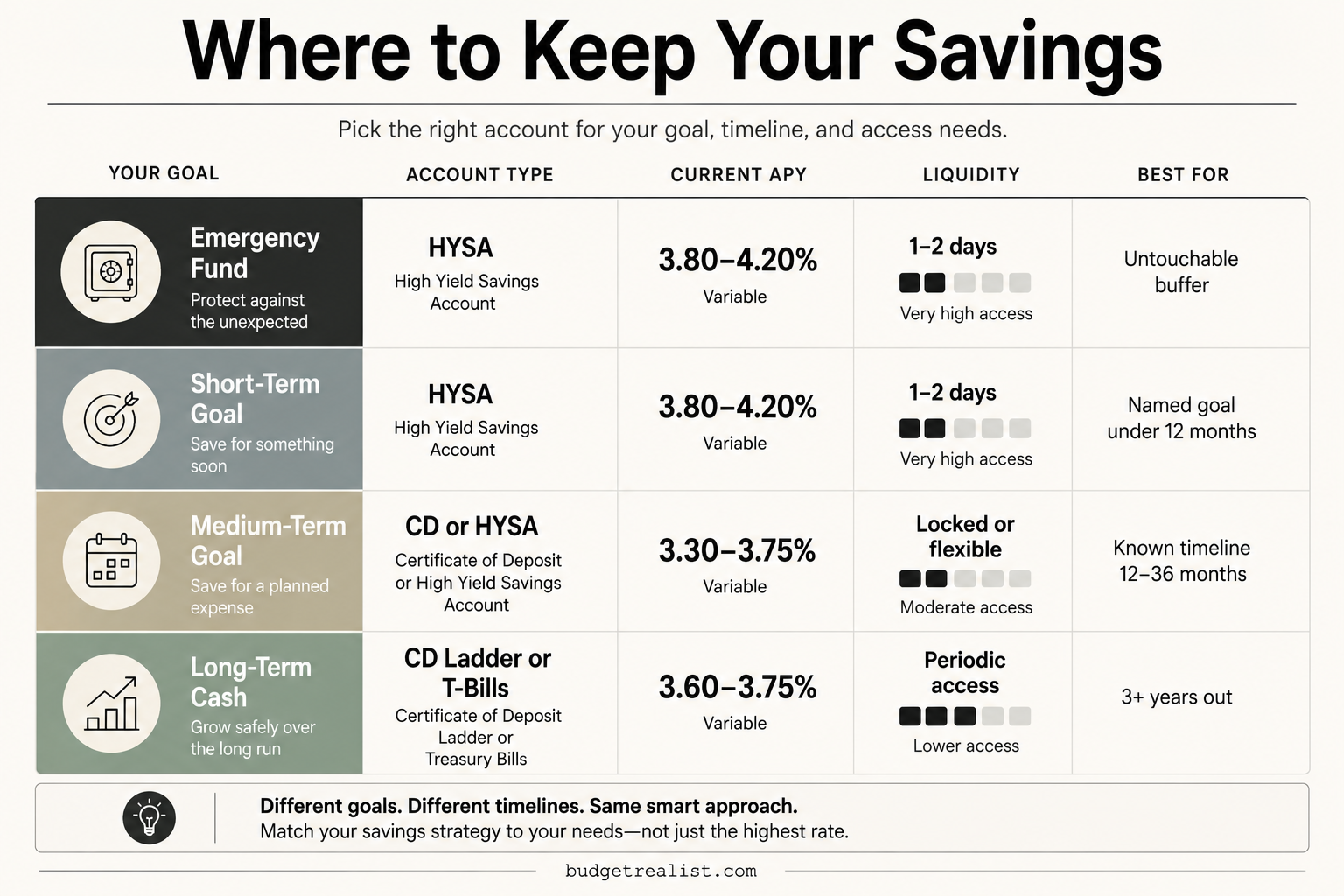
emergency fund vs savings account key differences visual comparison

The U.S. News 2026 survey found that 44% of Americans don’t consider their emergency fund and savings account to be separate. That’s nearly half the country treating them as one pile. It explains a lot about why so many people feel like they have savings and still end up in debt when something breaks.

Here’s what happens in practice. You have $2,400 in one account. You think of it as an emergency fund. You also think of it as vacation money.

In September, flights are on sale. You book. Spend $600. In November, the tires. Another $500. In March, the water heater dies. Replacement is $1,100. You’re now at $200, stressed, and probably putting the remaining $900 on a credit card.

Nothing about that is unusual. It’s what happens when one account serves too many masters.

QUICK TAKE

The emergency fund vs savings account difference is about purpose and rules, not account type. Both can be high-yield savings accounts. But one has strict withdrawal rules. The other is there to be spent on your goals.

SHOULD THEY BE SEPARATE

Should Your Emergency Fund Be Separate From Your Savings Account?

Yes. Keep them in separate accounts, ideally at a different bank from your checking account.

This isn’t just an organizational preference. It’s a behavioral guardrail. When your emergency fund and savings account are one account, the emergency fund label is the only thing protecting that money from non-emergency spending. That’s not enough protection. Labels are easy to ignore when a flight deal expires in six hours.

Moving the emergency fund to a different bank adds two business days to any transfer. That friction kills impulse withdrawals. Not because you can’t access the money, but because the delay forces you to actually decide whether something is a real emergency. Most things that feel urgent at 11pm don’t pass that two-day test.

WATCH OUT

Don’t lock your emergency fund in a CD chasing a slightly better rate. CDs charge early withdrawal penalties, which means your “emergency” money isn’t actually available in an emergency. Liquid always beats yield for this specific account.

WHERE TO KEEP EACH

Where to Keep Each: Emergency Fund vs Savings Account Options

Both accounts should earn interest. Letting money sit in a standard checking account or a low-yield savings account at a big bank is leaving real money on the table. The national savings average is 0.61% APY. Top high-yield savings accounts are paying over 4%.

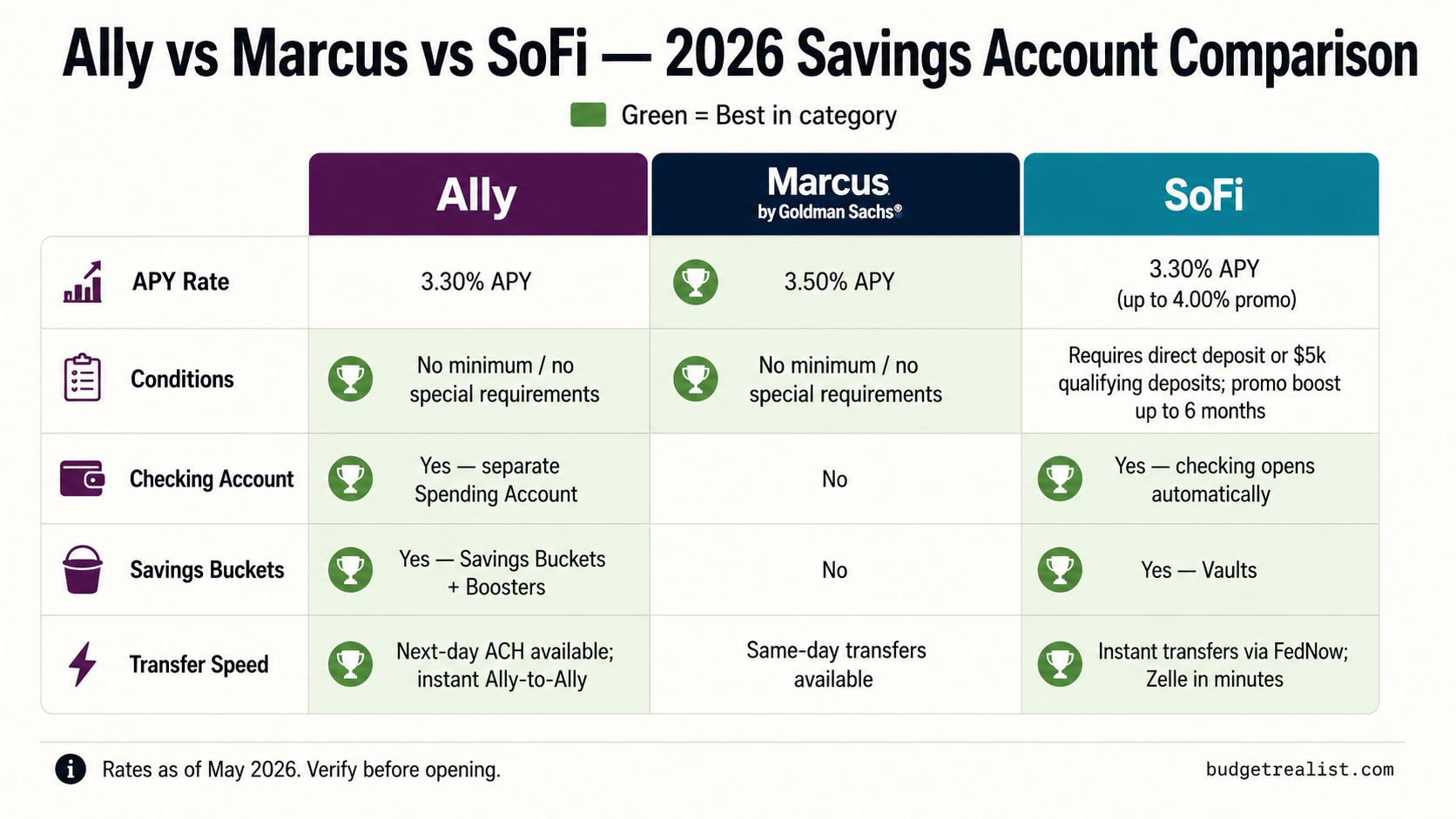
For the emergency fund, a high-yield savings account at an online bank is the right move. Ally, Marcus by Goldman Sachs, and SoFi all offer competitive rates with fast transfer speeds. The key requirement is liquidity: you need to be able to access the money within one to two business days without penalties. See the best high-yield savings accounts right now.

For the savings account, the same type of account works, but you have more flexibility. If your goal is more than 12 months away, a CD ladder can make sense. If it’s shorter, a high-yield savings account keeps it accessible.

One thing that applies to both: FDIC insurance. The Federal Deposit Insurance Corporation insures deposits up to $250,000 per depositor, per bank. If you split your emergency fund and savings across two different banks, each account is separately insured up to that limit.

HOW MUCH IN EACH

How Much Goes in Each Account

These two don’t compete. You build them in order, then run them at the same time.

01
Build a $1,000 starter emergency fund first

Before anything else. Before the vacation savings, before extra debt payments. This is the fire extinguisher. It doesn’t need to be big yet. It just needs to exist and be untouchable.

02
Open the savings account in parallel

Once the $1,000 is locked away, open a second account for actual goals. Name it something specific: “Vacation 2027,” “Car fund,” “Moving costs.” Give it a target number and a deadline.

03
Build the emergency fund to 3 to 6 months of expenses

The $1,000 is a floor, not the goal. Build toward three months of essential expenses, then six. Most people split their monthly savings contribution: part goes to the emergency fund until it’s fully funded, the rest goes to the savings goal account. Here’s the full guide to building your emergency fund step by step.

woman checking separate bank accounts on phone for emergency fund vs savings account

MISTAKES

3 Mistakes People Make With the Emergency Fund vs Savings Account Setup

Mistake 1: Treating the emergency fund as a savings account with stricter rules. You can’t willpower your way out of mixing them. The accounts need to be physically separate. Intention alone doesn’t work when you can see the balance.

Mistake 2: Not starting the savings account until the emergency fund is fully funded. It takes most people one to three years to build a full emergency fund. Waiting that long to start working toward any goal makes the whole process feel punishing. Run both at once with a split contribution.

Mistake 3: Keeping the emergency fund somewhere inconvenient. If it’s too hard to access, you won’t fund it consistently. If it’s too easy, you’ll spend it on non-emergencies. The sweet spot is a different bank from your checking, with same-day or next-day transfer capability.

BOTTOM LINE

The Emergency Fund vs Savings Account Difference Comes Down to Purpose

The emergency fund sits there waiting for something to go wrong. The savings account is building toward something you want. Both matter. Both should be earning interest. Neither should be in the same account.

Separate them. Name them. Put them at different banks if you need the friction to keep yourself honest. Once both are running, the stress of unexpected expenses drops considerably. Not because emergencies stop happening, but because you stop putting them on a card.

If you haven’t started building your emergency fund yet, this step-by-step guide to building an emergency fund walks through exactly how to get to $1,000 and beyond. And if you’re deciding where to park the money once it’s set aside, the best high-yield savings accounts right now are paying over 4% APY.

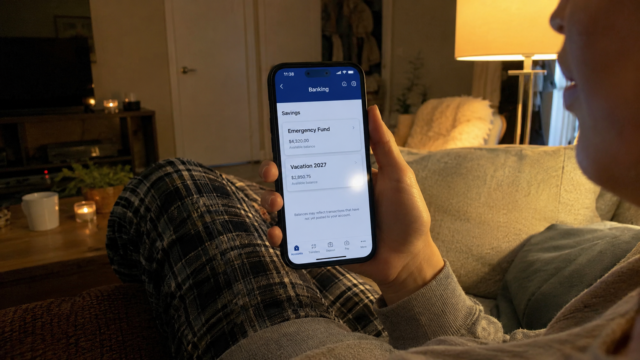
emergency fund vs savings account separate accounts on phone banking app

Where to Put Savings for Best Return: 4 Options Ranked by What Actually Matters

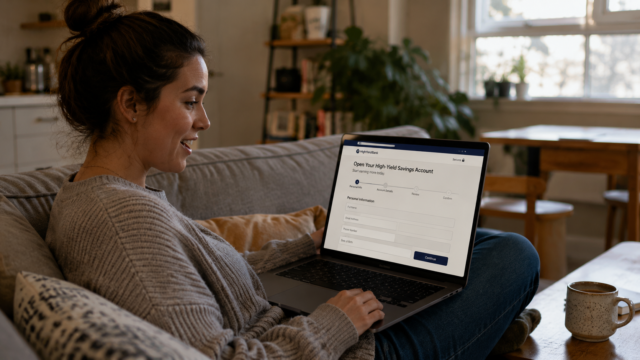
where to put savings for best return woman opening online savings account on laptop

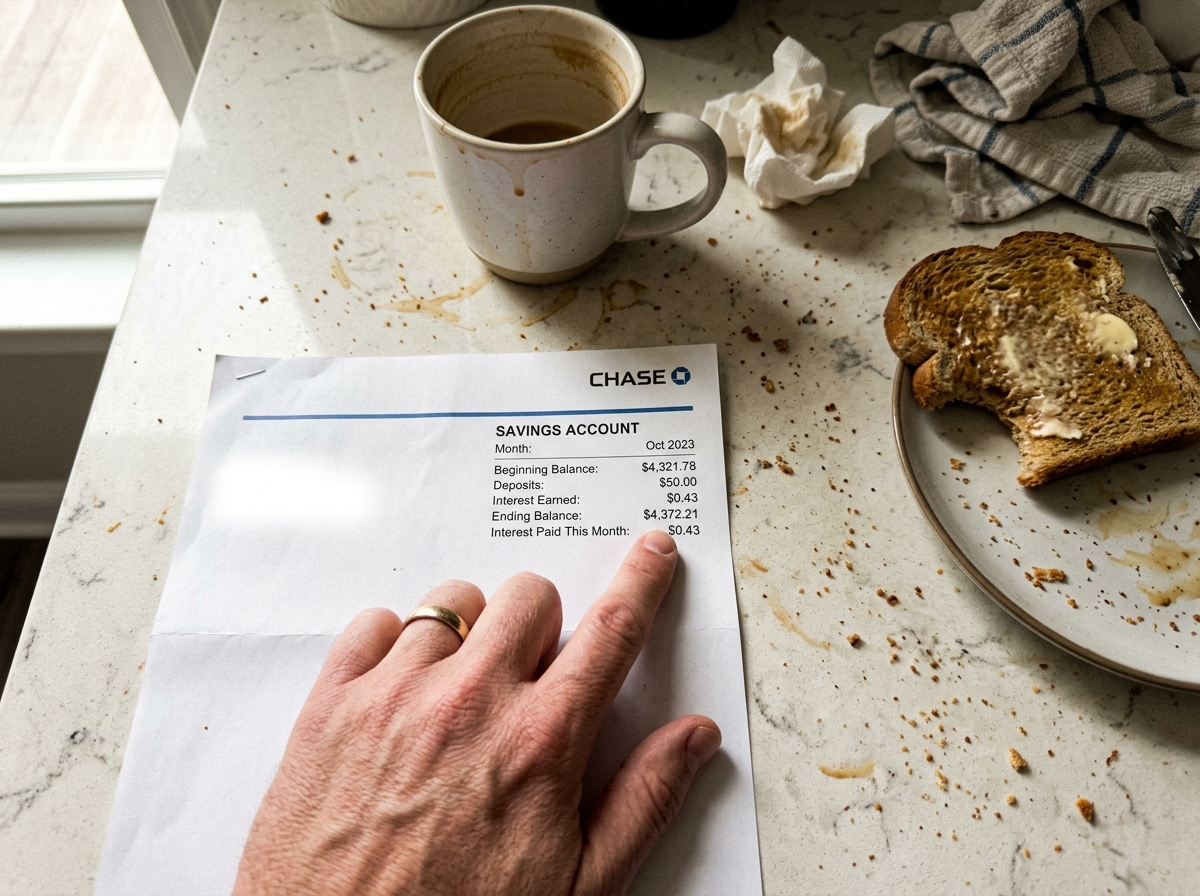
For three years, I had $4,000 sitting in a Chase savings account. It earned $1.20 in interest one year. One dollar and twenty cents. I bought a coffee with that, felt mildly guilty, and moved on.

The thing is, I knew high-yield savings accounts existed. I’d seen the ads. I just assumed there was a catch somewhere. Nobody hands you 4% for nothing, right?

There was no catch. I was just leaving money on the table because I didn’t understand the options. So here’s the breakdown I wish someone had given me.

Where to Put Savings for Best Return: Start With This Question

Before comparing rates, you need to answer one question: when do you need this money?

Your time horizon determines everything. Money you might need next month belongs somewhere different than money you’re parking for two years. Get this wrong and you’ll either lock up cash you need or leave it somewhere so liquid it earns almost nothing.

According to the FDIC, the national average savings account rate was 0.38% APY as of December 2025. Meanwhile, the best high-yield savings accounts are currently paying up to 4.21% APY. On a $10,000 balance, that’s the difference between earning $38 in a year and earning $421. Same money, same risk, wildly different outcome.

A Santander survey found that 70% of Americans aren’t yet using higher-yield accounts. Which means most people reading this are in the same boat I was: money parked somewhere comfortable, slowly losing ground to inflation.

QUICK TAKE

The best place to put savings for the best return is the one that matches your timeline. For most people with everyday savings goals, a high-yield savings account wins on every dimension: rate, safety, and access. The other options are better in specific situations.

where to put savings for best return comparison chart HYSA CD T-bill money market

Option 1: High-Yield Savings Account (HYSA)

Best for: Emergency funds, short-term goals, money you might need within 12 months.

A high-yield savings account works exactly like a regular savings account, except the rate is dramatically better. Online banks can offer higher rates because they don’t have branches to maintain. No ATMs to stock. No tellers. Those overhead savings go directly into your APY.

Current top rates are running around 4% to 4.21% APY as of May 2026. That’s roughly 10 times the national average. The money stays FDIC-insured up to $250,000, there’s no lock-in period, and you can withdraw whenever you need to.

The one thing to check before opening: transfer speed. Some online banks take two to three business days to move money to your checking account. That’s fine for planned spending. For emergencies, you want same-day or next-day transfers. Ally, Marcus by Goldman Sachs, and SoFi all have fast transfer options. See our full picks for the best high-yield savings accounts in 2026.

The downside: Rates are variable. If the Federal Reserve cuts rates, your APY drops. You’re not locking in today’s rate forever. In 2026, some analysts expect rates to ease toward 3% to 3.5% as the Fed continues adjusting policy. Still beats 0.38% at your big bank, but worth knowing.

Option 2: Certificates of Deposit (CDs)

Best for: Money you won’t need for a set period and want a guaranteed rate on.

A CD is a deal you make with a bank: you agree to leave your money for a fixed term (three months, one year, five years), and they agree to pay you a fixed rate the whole time. No surprises. No rate drops if the Fed moves.

Current CD rates are competitive with HYSAs, and in some cases slightly higher, especially on longer terms. The tradeoff is inflexibility. Pull money out early and you’ll pay an early withdrawal penalty, often equal to several months of interest.

The sweet spot for most people is a CD ladder: instead of putting everything into one long-term CD, you split it across multiple CDs with staggered maturity dates. Some matures in three months, some in six, some in a year. You get predictable access to portions of your money at regular intervals without sacrificing the higher rate entirely.

WATCH OUT

Never put your emergency fund in a CD. The whole point of an emergency fund is that you can access it immediately. Early withdrawal penalties will eat into the interest you earned, which defeats the purpose. CDs are for savings goals with a known, fixed timeline.

Option 3: Treasury Bills (T-Bills)

Best for: People in high-tax states who want a safe, predictable return and can leave money parked for 4 to 52 weeks.

Treasury bills are short-term US government debt. You buy them at a discount, they mature at face value, and the difference is your return. They’re backed by the federal government, which makes them about as safe as it gets.

Current T-bill yields are broadly comparable to top HYSA rates. But here’s the part most people miss: T-bill interest is exempt from state and local taxes. If you live in California, New York, or another high-tax state, that tax exemption can make T-bills more attractive than a HYSA with a similar headline rate, because your after-tax return is higher.

The catch: T-bills are less liquid than a HYSA. You buy them with a fixed term, and while you can sell them before maturity on the secondary market, it adds friction. They’re not the right choice if you might need the money suddenly.

You can buy T-bills directly through TreasuryDirect.gov with no fees or through a brokerage account.

Option 4: Money Market Accounts

Best for: People who want HYSA-level rates but also want check-writing or debit card access.

A money market account is essentially a hybrid between a savings account and a checking account. It typically offers higher rates than a traditional savings account, sometimes comparable to HYSAs, while also giving you the ability to write checks or use a debit card directly from the account.

The downside is that the top rates are usually not quite as high as the best HYSAs. You’re paying for the added convenience with a slightly lower yield. They’re also sometimes FDIC-insured (bank money market accounts) but not always. Money market funds at brokerages are covered by SIPC instead, which is a different protection structure.

Don’t confuse a money market account with a money market fund. The account is a bank product. The fund is an investment product. Similar name, different structure, different risk profile.

high yield savings account vs regular savings account rate comparison on phone

The Decision Framework: Which Option Is Right for You

If you need the money… Best option
Within 1 to 3 months HYSA or money market account
In 6 to 12 months, exact date known Short-term CD or T-bill
In 1 to 3 years, flexible date CD ladder or HYSA
Emergency fund (no set date) HYSA at a separate bank
Not sure yet HYSA until you decide

The “not sure yet” row is more common than people admit. If you don’t have a clear timeline, a HYSA is the right default. It earns a competitive rate, it’s liquid, and you can move the money the moment you know where it belongs.

What I Did Wrong (And What I Do Now)

After three years of watching Chase pay me essentially nothing, I finally moved my savings to an online bank. Setup took about 15 minutes. I linked it to my checking account and set up a weekly auto-transfer.

The first year I earned just over $200 in interest on a balance that averaged around $5,000. That’s not life-changing money. But it covered two months of groceries, which is more than nothing, and considerably more than the $1.20 I was earning before.

I now run three accounts: one HYSA for my emergency fund at a bank that transfers fast, one HYSA for shorter savings goals, and I’ve started experimenting with T-bills for a larger chunk I know I won’t need for six months. The tax exemption actually matters at my income level and state.

None of this required a financial advisor. It required understanding that “savings account” is not one thing. It’s a category, and within that category, some options pay you 10 times more than others for the exact same level of risk.

THE BOTTOM LINE

The best place to put savings for the best return is the one that fits your actual timeline. For most people, that’s a high-yield savings account: safe, liquid, and paying rates that are genuinely competitive right now. If you have money you know you won’t touch for six months or more, a CD or T-bill can get you a fixed rate that won’t move when the Fed does.

The worst option is doing nothing. Leaving money at a big bank earning 0.01% while online banks pay 4% is the most expensive kind of inertia. Your money should be working harder than that. Not sure which account is for what? Start here.

where to put savings for best return phone banking app transfer screen

What Is a High Yield Savings Account and Is It Actually Worth It

woman opening high yield savings account on laptop at home

For two years I thought “high yield savings account” was a marketing trick. Like those ads that say “premium” on the packaging but it’s just regular cereal. The name sounded like something for people who had real money to invest, not for someone with $800 trying not to overdraft.

I was wrong. A high yield savings account is just a savings account that pays you more interest. That’s it. No catch, no minimum balance in most cases, no lock-in period. Just more money for doing the same thing you were already doing.

Here’s what it actually is and whether you should open one.

What Is a High Yield Savings Account

A high yield savings account (HYSA) is a savings account that pays a significantly higher interest rate than a traditional savings account. That’s the entire definition. Same FDIC insurance, same ability to withdraw your money, same basic structure. The difference is the rate.

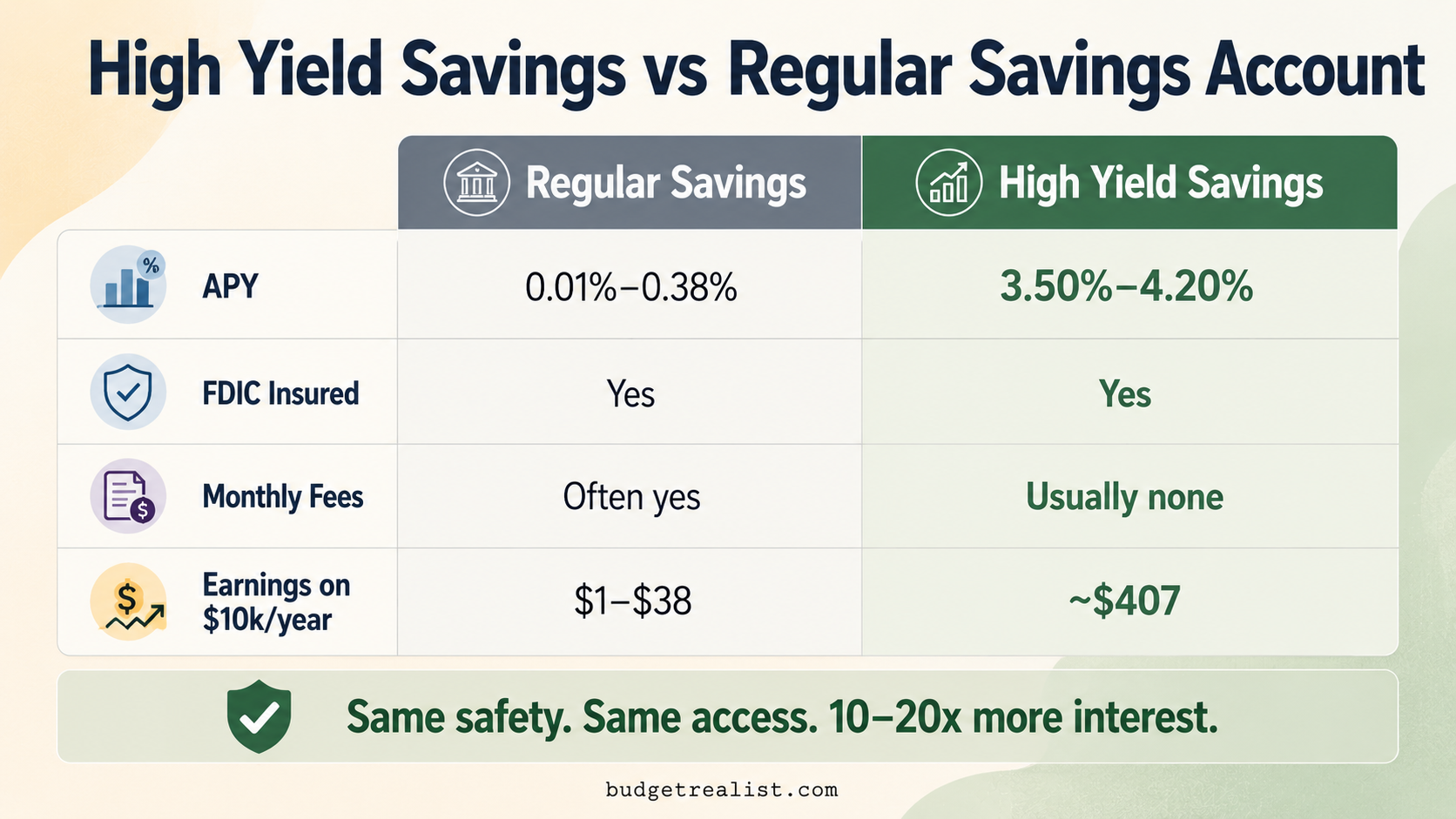
As of May 2026, the national average savings account rate is 0.38% APY according to the FDIC. The best high yield savings accounts are currently paying up to 4.20% APY. On a $5,000 balance, that’s the difference between earning $19 in a year and earning $210. Same money. Same bank account. Completely different outcome.

Most HYSAs are offered by online banks. No branches, no tellers, no ATMs to stock. Those overhead savings get passed to you as a higher interest rate. That’s why your Chase or Wells Fargo savings account pays 0.01% and an online bank pays 4%. It’s not charity. It’s a different cost structure.

QUICK TAKE

A high yield savings account pays 10 to 20 times more than a standard savings account with the same safety, the same FDIC protection, and the same access to your money. The only real difference is which bank is holding it.

what is a high yield savings account comparison regular savings vs high yield

How Does a High Yield Savings Account Work

You open an account, deposit money, and earn interest. The mechanics are identical to any other savings account.

The interest accrues daily, meaning the bank calculates how much you’ve earned every single day based on your balance. That amount gets added to your account, usually monthly. Then the following month, you earn interest on the original deposit plus the interest that was already added. That’s compound interest, and it’s why even small balances grow meaningfully over time in a high yield account.

Here’s a concrete example. You deposit $10,000 into a HYSA earning 4% APY. You don’t touch it for a year. At the end of the year you have approximately $10,407. The same $10,000 sitting in a Chase savings account at 0.01% earns you $1. That $406 difference is real money that took you zero additional effort to earn.

The rate is variable, meaning the bank can change it. When the Federal Reserve cuts interest rates, banks typically lower their savings rates too. Rates have been declining since late 2024 as the Fed has been cutting. The best accounts are currently in the 3.50% to 4.20% range as of May 2026, down from highs of around 5% in 2023 and 2024. Still worth it by a wide margin compared to big bank rates.

High Yield Savings Account vs Regular Savings Account

High Yield Savings Regular Savings
APY (May 2026) 3.50% to 4.20% 0.01% to 0.38%
FDIC insured Yes ($250,000) Yes ($250,000)
Minimum balance Usually $0 Varies
Monthly fees Usually $0 Often yes
Branch access Online only (mostly) In-person available
Transfer speed 1 to 3 business days Usually same day
Earnings on $10k/year ~$407 ~$1 to $38

The only real tradeoff is transfer speed. Online banks typically take one to three business days to move money to your checking account at another bank. If you’re using it as an emergency fund, pick a bank known for fast transfers. Ally, Marcus, and SoFi all have reliable transfer speeds. See how Ally, Marcus, and SoFi compare.

Is a High Yield Savings Account Safe

Yes. FDIC insured up to $250,000 per depositor per bank. The same protection that covers your checking account at Chase covers your HYSA at an online bank. If the bank fails, your money is protected.

The one thing to verify before opening any account is that the bank is actually FDIC insured. Every legitimate online bank is. You can check using the FDIC’s BankFind tool if you’re unsure. Type in the bank name and it confirms coverage instantly.

The interest rate risk is different from safety risk. Your principal is protected. The rate can go up or down. You’re not going to lose your $5,000. You might earn 3.5% instead of 4.2% if rates drop. That’s a yield change, not a safety issue.

checking savings account interest earned on phone banking app

High Yield Savings Account Pros and Cons

The pros:

You earn significantly more interest for doing nothing differently. The accounts are FDIC insured, so your money is as safe as it would be anywhere else. Most have no minimum balance and no monthly fees. Your money stays liquid, meaning you can access it without penalties whenever you need it. Setup takes 10 to 15 minutes online.

The cons:

Transfers take one to three business days to reach your checking account at another bank. If you’re using it as an emergency fund, that lag matters. Rates are variable and can drop when the Fed cuts. You’ll need to check periodically that your bank is still competitive. Some online banks have clunky apps or slow customer service. And unlike a CD, you’re not locking in today’s rate.

None of these cons outweigh the core benefit for most people. The transfer delay is manageable. The rate variability is manageable. Earning $1 a year instead of $400 is not manageable.

WATCH OUT

Some banks advertise high rates that require a minimum monthly deposit or direct deposit to qualify. Read the fine print before opening. The rate you see in the headline may not be the rate you actually earn. SoFi’s 4.00% APY, for example, requires active direct deposit. Without it, the rate drops to 1.00%.

Who Should Open a High Yield Savings Account

If you have any money sitting in a big bank savings account earning 0.01%, you should open one. Full stop. There is no scenario where earning $1 a year is better than earning $400 on the same money with the same safety.

It makes the most sense for: emergency funds, short-term savings goals (vacation, car, down payment), any money you don’t need to touch for at least a few months, and money you’re actively building up over time.

It makes less sense for: money you need to access instantly on the same day (keep that in checking), or money you’re certain you won’t need for over a year and want a locked-in rate (a CD might serve you better there). Here’s how to decide which account fits which goal.

How to Open a High Yield Savings Account

Pick a bank. Go to their website. Fill out the application. It asks for your name, address, Social Security number, and a linked bank account to fund it. The whole process takes about 15 minutes.

You’ll need to transfer money in from your existing checking account. Most banks let you do this during setup. The transfer usually takes one to two business days to clear.

Once it’s open, set up an automatic recurring transfer from your checking account on payday. Even $25 or $50 a week builds faster than you’d expect when the interest is compounding daily at 4% instead of 0.01%.

The hardest part isn’t opening the account. It’s overcoming the inertia of switching from the bank you’ve had since high school. I put it off for two years because I assumed it was complicated. It wasn’t. It was 15 minutes and a $200 opening transfer. I wish I’d done it the day I first heard about it. See our picks for the best high yield savings accounts in 2026.

THE BOTTOM LINE

A high yield savings account is a regular savings account at an online bank that pays 10 to 20 times more interest than the national average. It’s FDIC insured, has no lock-in period, and takes 15 minutes to open. If your savings are currently sitting at a big bank earning next to nothing, there is no good reason not to move them.

The money you leave at Chase earning 0.01% isn’t sitting still. It’s falling behind inflation while an online bank would have paid you 4% for holding it. That’s the cost of not knowing what a high yield savings account is. Now you know.

what is a high yield savings account woman checking online bank balance on laptop

How to Build an Emergency Fund: 5 Steps to Your First $1,000 and Beyond

how to build an emergency fund starting with phone and banking app

The math on not having an emergency fund is brutal. A $380 car repair with no buffer goes on a credit card. Four months of minimum payments later, that $380 problem costs closer to $430. The repair is done but the debt isn’t.

Most articles will tell you to save three to six months of expenses. That’s the right destination. But if you’re starting from close to zero, that target is so far away it stops functioning as motivation and starts functioning as an excuse to not start at all.

Here’s how to build an emergency fund that actually gets built, starting with a number that doesn’t require a miracle to reach.

THE REALITY

According to an Empower survey of 2,202 Americans conducted in June 2025, 1 in 3 Americans have no emergency savings at all. A U.S. News survey from February 2026 found that more than 2 in 5 Americans couldn’t cover a $1,000 emergency expense from savings. If that’s you right now, you’re not behind. You’re in the majority. But that doesn’t mean you should stay there.

STEP BY STEP

How to Build an Emergency Fund in 5 Steps

01
Set your first target at $1,000, not 3 to 6 months

$1,000 covers the most common single emergencies: a car repair, a medical copay, a broken appliance. It’s achievable in weeks or a few months on most incomes. And once you hit it, the habit is already built. You move to one month of expenses, then three, then six. The number grows because the behavior is already there, not the other way around.

02
Open a separate account specifically for your emergency fund

Money that sits next to your spending money gets spent. Your emergency fund needs to be one extra step away: visible enough that you know it’s there, separate enough that you don’t absent-mindedly drain it.

A high-yield savings account is the right place for it. You earn a real return while the money sits there, and the slight friction of a transfer means you won’t dip into it for things that aren’t actually emergencies. Here are the best high-yield savings accounts right now if you need somewhere to start.

QUICK TIP

Name the account something specific in your banking app. “Emergency Fund” or “Do Not Touch” creates psychological friction that makes it harder to raid for non-emergencies. Small thing. It works.

03
Automate a fixed transfer every payday, however small

This is the step that actually builds the fund. Not willpower. Not remembering. Automation.

Pick an amount that won’t break your budget. $25, $50, $75. Set up an automatic transfer from checking to your emergency fund on the same day you get paid, before you touch anything else. $50 a month gets you to $1,000 in 20 months. $100 gets you there in 10. The amount matters less than the fact that it happens without you deciding each time.

how to build an emergency fund automatic transfer set up on phone

04
Find one expense to cut and redirect it to the fund

Automation handles consistency. One cut accelerates the timeline. You don’t need to overhaul your whole budget, you need one thing: one subscription you forgot you had, one fewer takeout meal per week, one impulse category you pause for 90 days. Redirect that amount on the same day you would have spent it.

On top of a $75 automatic transfer, an extra $40 gets you to $1,000 in under nine months instead of over a year. And if you get a tax refund, a bonus, or any windfall, putting half of it straight into the fund can skip months of slow saving in a single move.

WORTH KNOWING

If you’re working on paying down debt at the same time, get to $1,000 in the emergency fund first before attacking debt aggressively. Without a buffer, the next unexpected expense goes straight on a credit card and undoes your progress. The $1,000 floor exists specifically to break that cycle.

05
Decide what counts as an emergency before you ever need to spend it

The fund gets raided most often not because of true emergencies but because people haven’t defined what qualifies. Under financial stress, almost anything feels urgent.

Before you build the fund, decide what it’s for. Job loss: yes. Medical bill: yes. Car repair that stops you getting to work: yes. Flight home for a wedding: no. New phone because yours is slow: no. Sale on something you were planning to buy anyway: absolutely not.

Make that list once, clearly, without pressure. Not six times in the heat of the moment when your judgment is compromised.

HOW MUCH

Emergency Fund: How Much You Actually Need at Each Stage

Three to six months of expenses is the right destination. Most people need staged targets to get there without losing momentum.

Stage Target What It Covers
Stage 1 $1,000 Most common one-off emergencies: car repair, medical copay, appliance
Stage 2 1 month of expenses Short-term job loss, major unexpected bill, bridging a gap
Stage 3 3 months of expenses Job loss with standard notice period, health emergency, serious car or home repair
Stage 4 6 months of expenses Full job loss buffer, essential for freelancers, single-income households, variable income

To calculate your monthly expenses: add up rent or mortgage, utilities, groceries, insurance, minimum debt payments, transport. Not subscriptions, not dining out, not discretionary spending. Just the non-negotiables. Multiply by three for Stage 3. Multiply by six for Stage 4.

COMMON QUESTIONS

3 Questions People Always Ask About How to Build an Emergency Fund

Where should I keep my emergency fund?

A high-yield savings account. Accessible within one to two business days, earning a real return, separate from your daily spending. Do not invest it in stocks or ETFs. The whole point is that it’s there when you need it, not down 20% during the exact market crash that also cost you your job.

Should I build an emergency fund or pay off debt first?

Get to $1,000 first, then attack debt. Without a minimum buffer, the next unexpected expense goes on a credit card and resets your progress. Once you hit $1,000, focus on high-interest debt while keeping that floor intact. Return to building the full fund once the expensive debt is gone.

What if I use it and have to start over?

That’s what it’s for. Using it is not a failure. Replenishing it is the only move. Restart your automatic transfer the same week the emergency is handled, even if you’re back to $25 a month. The system is designed to be rebuilt. That’s the whole point.

BOTTOM LINE

Start With $1,000. Everything Else Follows.

Knowing how to build an emergency fund is the easy part. Starting when the amount you can set aside feels embarrassingly small is the hard part.

$25 a week is $1,300 a year. $50 a week is $2,600. The math works at any contribution level. What doesn’t work is waiting until you can afford to save more.

Open the account today. Set one automatic transfer. Define what an emergency is. Then leave it alone until you actually need it.

If you haven’t sorted out your budgeting system yet to free up room to save, this guide to choosing the right budgeting method will help. And if you’re using the pay yourself first approach, your emergency fund is exactly where that first automated transfer should go.

According to Empower’s 2025 Safety Net research, 64% of Americans say building emergency savings is their top financial priority. Most of them still haven’t started. The difference between those who do and those who don’t is almost always the same thing: they stopped waiting for the right moment and automated the first transfer anyway.

How to Save Money on Food: 8 Changes That Cut Your Bill Fast

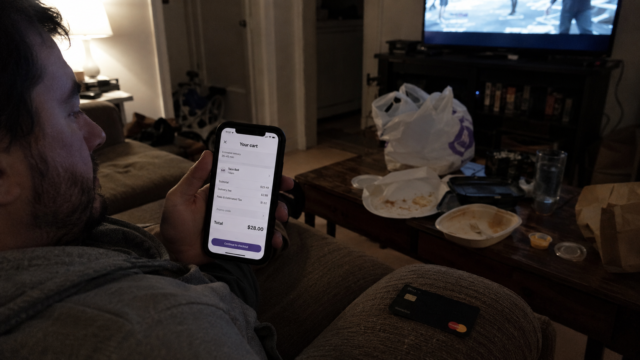
person sitting on couch looking at food delivery app on phone with credit card in hand late at night

Most advice on how to save money on food stops at the grocery store. Meal plan, buy store brand, use coupons. That’s real advice. But for the average American household, the grocery store is only part of the problem.

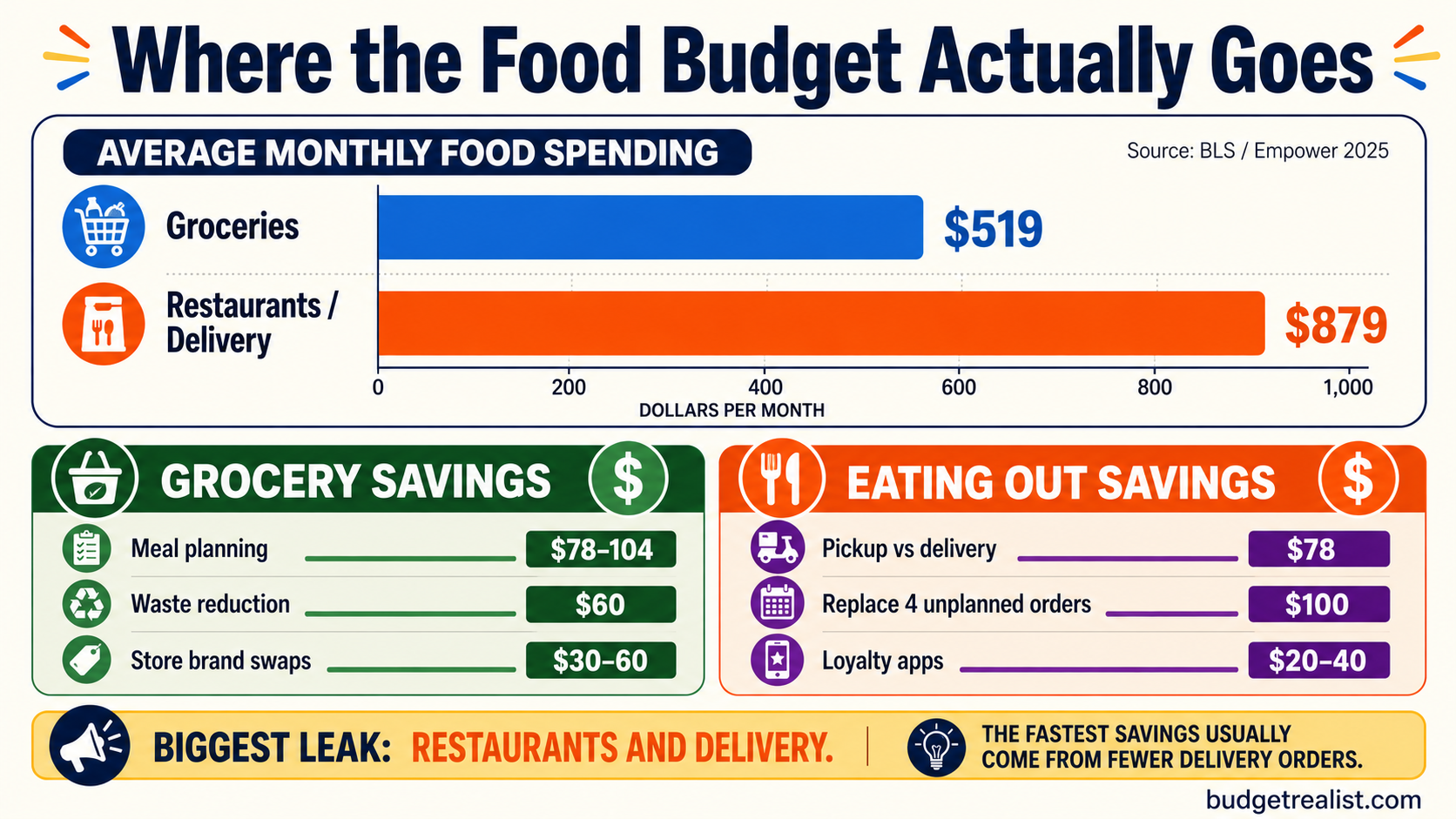
According to Empower Personal Dashboard data for the year ended August 2025, Americans spend about $879 per month at restaurants on average, on top of groceries. That’s more than $10,500 a year leaving the household through sit-down meals, takeout, and delivery fees.

The grocery bill gets all the attention because it’s visible on the receipt. Restaurant and delivery spending is scattered across a dozen apps and credit card statements and it’s easy to lose track of what it actually adds up to.

Here are 8 changes that show you how to save money on food across the full budget, not just the cart.

THE FULL PICTURE

How to Save Money on Food: Understanding Where It Actually Goes

Before cutting anything, look at the full number. Most people dramatically underestimate what they spend on food away from home because it’s fragmented across so many channels.

Food Category Average Monthly Spend Source
Groceries (at-home food) ~$519 BLS Consumer Expenditure Survey 2024
Restaurants, takeout, delivery ~$879 Empower Personal Dashboard, Aug 2025
Total food spending ~$1,398/month Combined

That $1,398 combined monthly figure is for the average household. For a single person it’s lower, but the ratio is often similar: grocery spending is the smaller half of total food costs, not the larger one.

This matters because most people trying to figure out how to save money on food focus entirely on the $519 grocery number and ignore the $879. The grocery store is already somewhat optimized for most households. The restaurant and delivery spending is usually running on autopilot with no system at all.

how to save money on food breakdown of total food budget groceries vs eating out vs delivery

EATING OUT

How to Save Money on Food Away From Home

Telling people to stop eating out is the personal finance equivalent of telling someone to just stop buying coffee. It ignores that eating out is social, sometimes necessary, and one of the few genuine pleasures in a constrained budget.

The goal is not elimination. It’s having a system so the spending reflects actual choices rather than passive drift.

Change 1: Set a monthly eating-out number and track it

Most overspending on restaurants is not the result of one expensive dinner. It’s a Tuesday lunch here, a Friday takeout there, a weekend brunch that felt reasonable in isolation and collectively added up to $400 before the month was half over.

Pick a number. Pull up last month’s bank statement and add up every restaurant, cafe, and food delivery charge. That real number is your starting point, not a judgment. Decide if it’s acceptable or not, then set the new target.

The act of tracking alone reduces spending. Not because of willpower, but because most of the drift happens in blind spots. When you know the running total, the Tuesday lunch becomes a conscious choice instead of a default.

Change 2: Shift from delivery to pickup

This is the single easiest way to save money on food without changing what you eat. Delivery fees and tips have pushed delivery prices nearly 80% higher than pickup for the same order from the same restaurant.

A $15 meal becomes $22 to $28 by the time DoorDash finishes adding service fees, delivery fees, and the tip prompt. Pickup orders grew 14% last year while delivery spending fell 12% as the math stopped working for more people. Most apps let you switch to pickup in one tap.

THE DELIVERY MATH

A $15 burger via DoorDash: $15 food + $3.99 delivery fee + $2 service fee + $3 tip = $23.99. The same burger picked up: $15 plus whatever you feel like tipping. That’s $9 saved on one order. At twice a week, that’s $936 a year.

Change 3: Stock three fast home meals for unplanned hunger

Most unplanned delivery orders happen when someone is hungry and there is nothing easy at home. The $28 Wednesday night order is almost never planned. It’s a failure of food availability at 7pm when cooking felt impossible.

The fix is keeping a small inventory of fast options: eggs, pasta, canned beans, frozen protein. Something that costs $2 and takes 15 minutes. This is not about becoming a meal prepper. It’s about having an exit ramp when the delivery app feels like the only option.

Change 4: Use restaurant loyalty apps at places you already eat

If you eat at the same places regularly, their loyalty apps are free money. Chipotle, Panera, Starbucks, McDonald’s, Chick-fil-A, Subway: all have apps with rewards, free items, and exclusive pricing.

47% of diners now use loyalty programs at least once a week, up from 34% in 2023. If you’re in the 53% who don’t, you’re paying full price while everyone else gets free food.

AT HOME

How to Save Money on Food at Home Beyond the Grocery Store

The grocery store is one part of at-home food spending. How you cook and what you do with what you bought determines whether the money you spend at the store actually feeds you or ends up in the bin.

Change 5: Cook once, eat three times

Batch cooking is the highest-leverage habit in a food budget. Not because it’s trendy, because the unit economics are dramatically better than cooking individual meals.

A pot of rice and beans feeds four for $3. The same calories from a restaurant feed one for $14. A large batch of chicken thighs roasted on Sunday costs $12 and covers lunches for three days for two people. The individual lunch order costs $12 per person per day.

You don’t need to prep like a fitness influencer. One batch item per week covers the most expensive meal in most budgets: the weekday lunch bought out of necessity because there’s nothing at home.

Change 6: Learn five cheap proteins

Protein is the most expensive line item in most grocery budgets and the biggest driver of restaurant spending. Knowing which proteins are genuinely cheap changes the math on cooking at home.

Eggs: $0.25 to $0.40 each, complete protein, cook in under five minutes. Canned tuna: $1.50 to $2.50 per can, covers a full meal. Dried lentils: $1.50 per pound, feeds four. Chicken thighs: $2 to $4 per pound consistently. Frozen shrimp: goes on sale regularly and cooks faster than anything else.

These are not punishment foods. They are the building blocks of most cuisines. The idea that eating cheaply means eating badly is a myth built by people who have never cooked with cheap ingredients properly.

Change 7: Freeze before it goes bad

Most food waste happens not because people bought too much, but because they didn’t act fast enough before something turned.

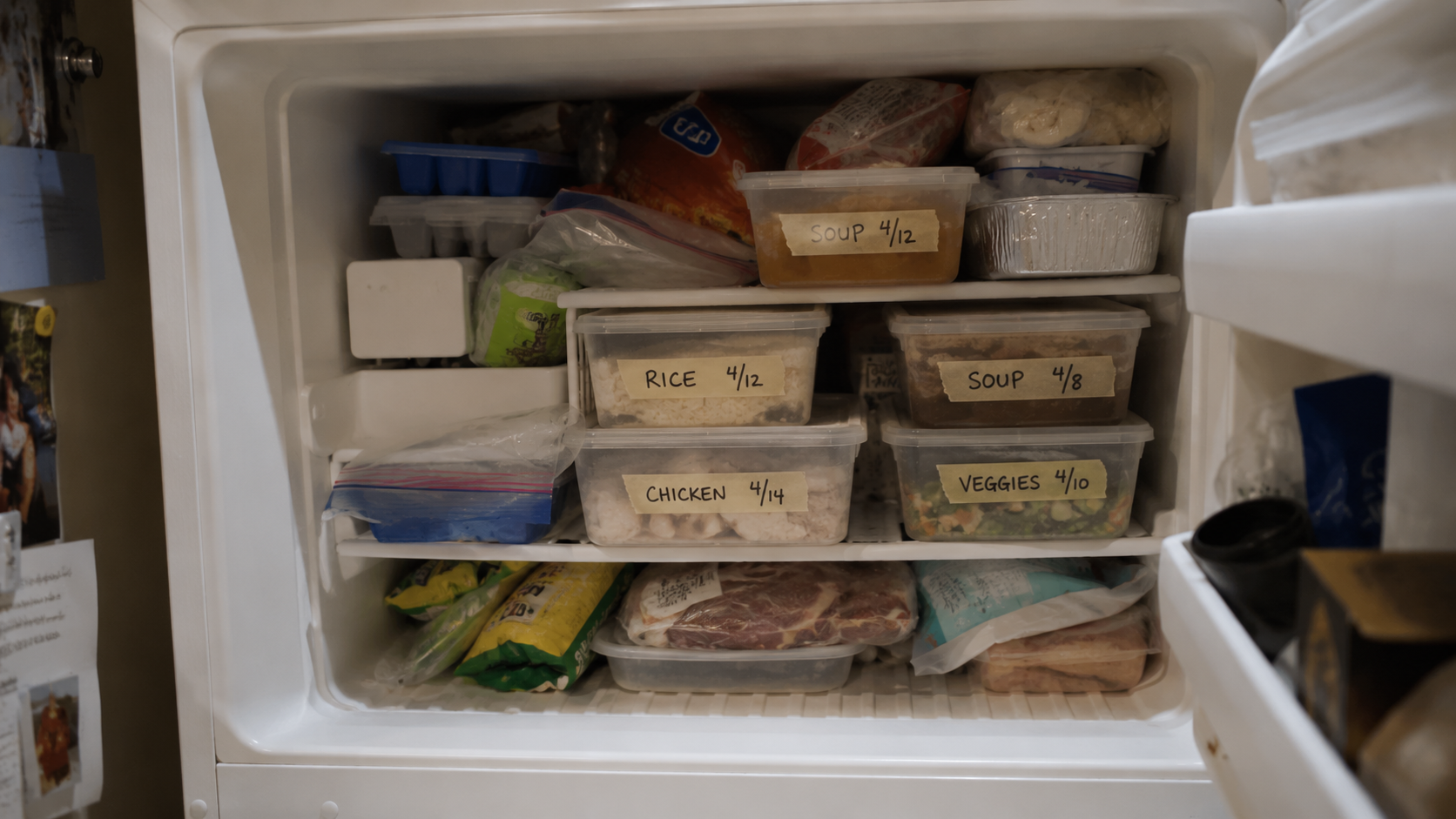
Bread going stale: slice and freeze. Bananas browning: freeze them. Leftover rice: freeze in portions. Chicken you won’t cook tonight: freeze before it goes off. A freezer used deliberately cuts the $60 per person monthly waste figure in half for most households, according to EPA estimates, adding $30 to $60 back per person with zero change to what you buy.

Change 8: Audit subscriptions and meal kit services annually

Meal kit services (HelloFresh, Blue Apron, EveryPlate) solve a real problem: decision fatigue around cooking. But they cost $10 to $15 per serving, which is restaurant territory for food you still have to cook yourself.

If you’re using one, calculate the actual per-meal cost and compare it to what you’d spend buying the same ingredients at the grocery store. For some households the convenience is worth it. For most, it’s a subscription that made sense when it started and has been quietly running on autopilot since.

open freezer with labeled containers of batch cooked food organized on shelves

BOTTOM LINE

How to Save Money on Food: Start With the Bigger Half

The grocery store is not where most households overspend on food. The $879 monthly average on restaurants and delivery is. Focusing only on grocery savings while the eating-out budget runs unchecked is like bailing out a boat while leaving the hole open.

Start with the eating-out audit. Set a number. Switch delivery to pickup. Stock three fast home meals. Those three moves alone are worth more annually than any amount of couponing at the grocery store.

Then layer in the at-home changes: batch cooking, cheap proteins, freezing before waste happens, and auditing any food subscriptions. Together these 8 changes are how a household genuinely reduces total food spending in a way that sticks.

If you want the grocery store side covered in detail, this breakdown of ways to save money on groceries covers the full shopping strategy. And once the savings are freed up, the pay yourself first method is the simplest way to make sure they go somewhere useful instead of dissolving back into spending.

How to Save Money on Groceries: 4 Decisions That Cut Your Bill

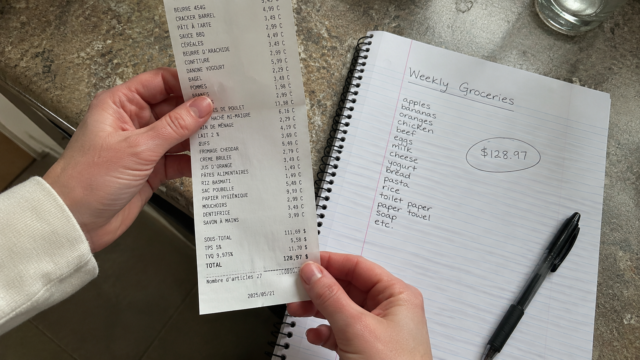
hands holding a grocery receipt next to an open notebook with weekly food budget written at the top

Most people trying to figure out how to save money on groceries make the same mistake: they set a budget based on what they wish they spent instead of what they actually spend, then wonder why it doesn’t work.

A $200 weekly grocery budget for a household that has been spending $380 is not a budget. It’s a wish. The gap between the two is where the guilt lives, not the savings.

Here’s how to save money on groceries in a way that actually works: start with what you actually spend, benchmark it against real data, find where the waste is, and build a system that brings the number down gradually without requiring willpower you don’t have at 6pm on a Tuesday.

THE BASELINE

How to Save Money on Groceries: Start With a Real Number

Before cutting anything, you need to know what you actually spend. Not what you think you spend. Pull up your last three months of bank or credit card statements and add up every grocery store charge. Divide by three. That is your actual monthly grocery spend.

Most people find it is higher than they expected. That is normal and useful. The number is not a judgment. It is a starting point.

Now benchmark it against the USDA Food Plans, which are the most reliable publicly available data on what households actually need to spend on groceries at different income levels.

Household Thrifty Plan Low-Cost Plan Moderate Plan
Single adult (19-50) $249 to $313/mo $330/mo $391/mo
Two adults $618/mo $695/mo $795/mo
Family of four $1,003/mo $1,128/mo $1,257/mo

Source: USDA Food Plans February 2026. The thrifty plan is what SNAP benefits are based on. The moderate plan is what most middle-income households should be spending.

If you are significantly above the moderate plan for your household size, there is real room to cut your grocery bill. If you are near the thrifty plan already, the savings available from spending cuts are smaller and the focus should shift to waste reduction instead.

HOW TO USE THIS TABLE

If your actual monthly spend is above the moderate plan for your household size, set your target at the low-cost plan. That gives you a realistic reduction without requiring extreme sacrifice. If you’re already near the low-cost plan, focus on waste reduction before cutting the budget further.

WHERE TO SHOP

How to Save Money on Groceries: Choosing the Right Store

Store selection is one of the most underleveraged ways to save money on groceries. Most people shop at whatever store is most convenient and never reconsider it.

The price difference between store types is significant enough that switching where you shop can save more than any amount of coupon clipping at a higher-priced store.

Aldi and Lidl: the cheapest option for most households

Aldi consistently comes out as the lowest-cost major grocery chain in independent price comparisons. A 2025 Ramsey Solutions analysis found Aldi prices averaging 14 to 40% lower than conventional supermarkets on comparable items. The tradeoff: limited selection, mostly private label brands, and you need a quarter for the cart.

For staples like produce, dairy, eggs, canned goods, pasta, and frozen vegetables, Aldi is hard to beat. For specialty items or specific brands, you may need a second store. Most households that switch to Aldi as their primary store save $80 to $150 per month without changing what they eat.

Walmart and Costco: different use cases

Walmart Grocery consistently beats most traditional supermarkets on price for name-brand items and has improved quality significantly over the past five years. It is the best option for households who want low prices without the limited selection of Aldi.

Costco makes sense for households of three or more people who reliably go through large quantities of non-perishables: paper products, canned goods, oils, nuts, frozen protein. The $65 annual membership pays for itself quickly at that scale.

For smaller households, the per-unit savings are often wiped out by waste from oversized quantities. A 5lb bag of spinach is not cheaper per ounce if you throw out 3lbs of it.

Traditional supermarkets: best for sales and loyalty programs

Kroger, Safeway, Publix, and regional chains run the deepest weekly sales of any store type. If you are willing to plan your meals around what is on sale, traditional supermarkets can be very competitive. Their loyalty programs return real value: Kroger fuel points, Safeway Just for U, and similar programs add up to $20 to $50 per month in savings for regular shoppers.

The strategy most frugal households use to save money on groceries: Aldi for staples, traditional supermarket for produce sales and loyalty rewards, Costco for specific bulk items if household size justifies the membership.

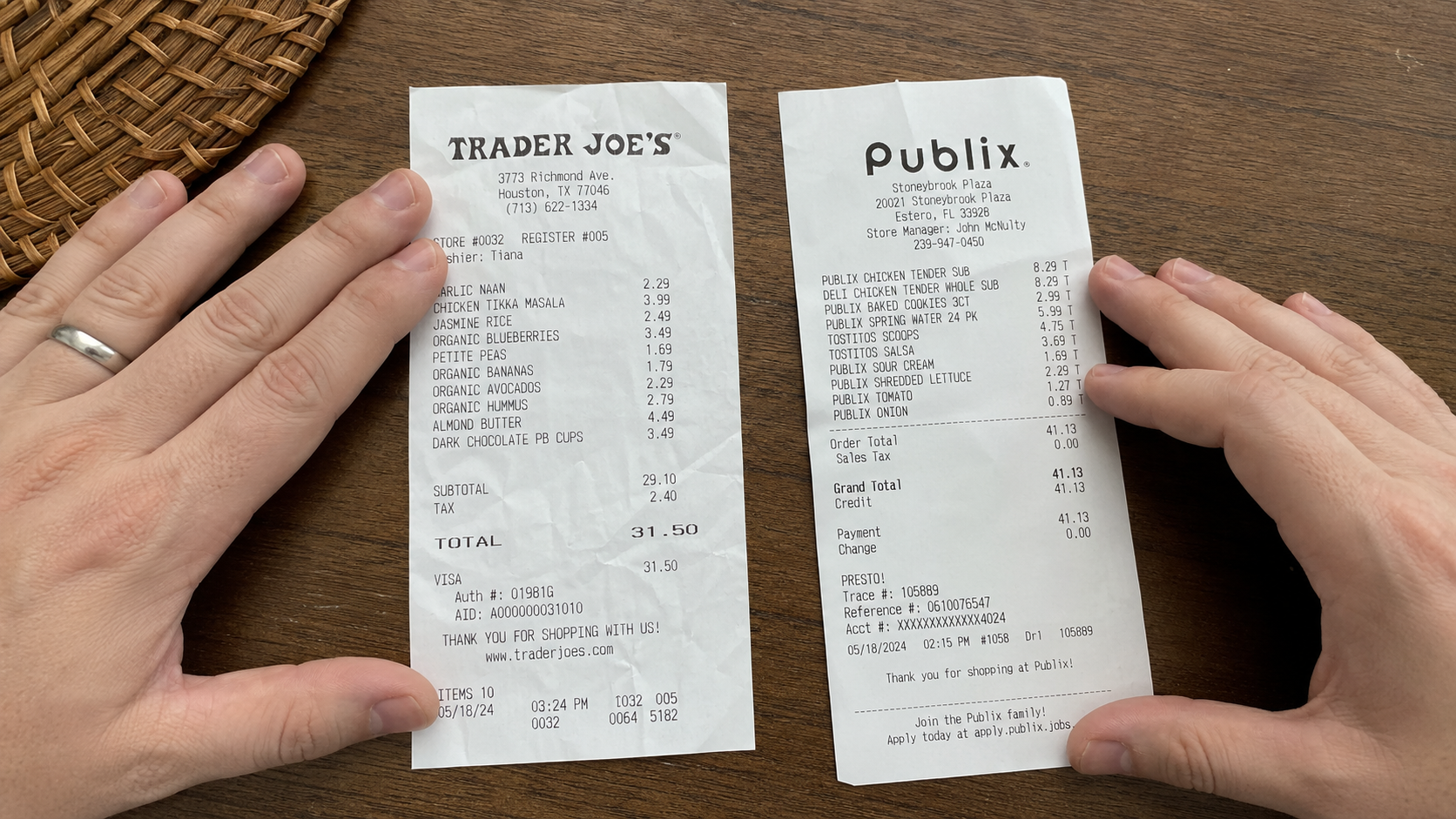
how to save money on groceries by comparing two store receipts side by side

THE SYSTEM

How to Save Money on Groceries With a Weekly System

Store choice and budget setting are one-time decisions. The weekly system is what keeps the number down month after month without requiring constant willpower.

Step 1: Check what you have before writing the list

Open the fridge, freezer, and pantry before writing your shopping list every single week. Write down what needs to be used first. Build at least two meals around ingredients you already have.

This one habit cuts waste by 20 to 30% for most households because most food waste comes from buying something you already had or buying ingredients for a meal you never cooked.

Step 2: Plan five dinners, write the exact list

Five dinners planned before shopping means you buy exactly what those five dinners need. No vague intentions. Specific meals. Specific ingredients. A list that maps directly to those meals.

Lunches should be covered by leftovers wherever possible. Breakfasts should be simple and repeatable: eggs, oats, yogurt, fruit. The grocery budget breaks most often on lunch and breakfast items bought with good intentions and never eaten.

Step 3: Set a specific dollar limit before you leave

Not a vague sense of what you want to spend. A specific number, based on your USDA benchmark target. Write it down before you leave. Track your running total as you shop. When you are close to the limit, you stop adding items.

This sounds tedious. It stops after three or four shops because you develop an accurate intuitive sense of what things cost. Most people who do this for a month find they never need to tally again because the habit recalibrated their price awareness.

Step 4: Use the store’s app for digital coupons before checkout

Every major chain’s app has digital coupons that load directly to your loyalty card. Spend two minutes clipping coupons for items already on your list before entering the store. Do not clip coupons for items not on your list. A coupon for something you were not going to buy is not a saving on groceries. It is a purchase trigger.

COMMON QUESTIONS

Questions People Ask About How to Save Money on Groceries

Is it cheaper to buy organic?

Almost never, calorie for calorie. Organic produce costs 20 to 100% more than conventional for nutritionally comparable food. If budget is the primary concern, conventional is the right choice across the board. If you have strong preferences about specific items, buy organic selectively on those and conventional on everything else.

Is it worth driving to multiple stores?

Only if the stores are close to your normal route and the time cost is genuinely low. Driving 20 minutes out of your way to save $15 is not efficient once you account for fuel and time. The multi-store strategy works when stores are within a mile or two of each other.

How much should groceries cost per week?

Using the USDA thrifty plan: a single adult should be able to feed themselves on $62 to $78 per week. Two adults: $155 per week. A family of four: $251 per week. These are tight but achievable with meal planning and Aldi-level pricing. The moderate plan adds 25 to 30% for more variety.

Does buying in bulk actually save money on groceries?

On non-perishables with long shelf lives: yes. Rice, dried beans, oats, canned goods, pasta, cooking oil, paper products. On perishables: only if your household reliably uses the full quantity before it expires.

THE NUMBER MOST PEOPLE MISS

The average American wastes $728 per person per year on food they buy and never eat, according to EPA estimates. That’s $60 per person per month going in the bin. For a two-person household, cutting food waste in half saves $60 per month without changing what you buy at all. Waste reduction is the most overlooked way to save money on groceries because it requires no sacrifice, only attention.

BOTTOM LINE

How to Save Money on Groceries Comes Down to 4 Decisions

Where you shop. What you plan before you go. How much you commit to spending before you leave. And how seriously you treat waste reduction. Everything else is optimization on top of those four decisions.

Set your benchmark using the USDA data for your household size. Switch to Aldi or Walmart as your primary store if you haven’t already. Plan five dinners before every shop. Set the dollar limit before you leave.

These four habits move most households from the moderate plan spending level to somewhere between the low-cost and thrifty plan, which is $130 to $250 per month in savings for a family of four.

The detailed tactics for what happens inside the store are covered in this guide to ways to save money on groceries. And if the grocery bill is part of a larger food budget problem, this breakdown of how to save money on food covers the restaurant and delivery side too.

Frugal Living Hacks Ranked by Actual Dollar Impact (Start Here)

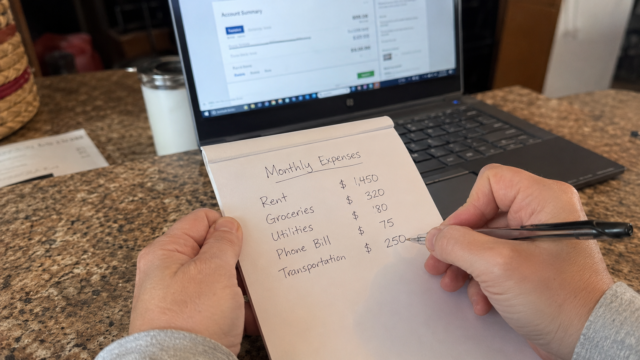
hands writing a monthly budget breakdown on a notepad next to a laptop showing bank statements

The problem with most frugal living hacks lists is that they treat every tip as equal. Making your own cleaning products gets the same bullet point as negotiating your rent. One saves you $4 a month. The other saves you $200. Knowing which is which changes everything about where you put your effort.

Most people trying to live more frugally run out of motivation not because frugality doesn’t work, but because they spent six months optimizing the wrong things. They made their own laundry detergent and clipped coupons and skipped coffee while their car insurance, subscriptions, and phone plan quietly ran $400 a month over what they needed to pay.

These frugal living hacks are ranked by actual dollar impact so you can start where the money is.

HIGH LEVERAGE

High-Leverage Frugal Living Hacks: Where the Real Money Is

These are the frugal living hacks that move your budget by hundreds of dollars a month. They require more effort than switching to store-brand cereal. They are worth it by an order of magnitude.

Hack 1: Audit every recurring subscription and service

The average American household pays for 4.5 streaming services, according to J.D. Power’s 2024 Streaming Satisfaction Study. That’s before gym memberships, software subscriptions, news sites, cloud storage, meal kits, and the Amazon Prime auto-renewal from three years ago.

Open your bank and credit card statements. Search for every recurring charge. List them. Most households find $100 to $300 in monthly subscriptions when they do this for the first time, including charges they have no memory of signing up for.

Cancel anything unused for 60 days. Rotate streaming services instead of stacking them. One service for two months, then switch. You watch the same content on a longer timeline for a third of the cost.

Realistic monthly saving: $80 to $200

Hack 2: Negotiate or switch your insurance annually

Insurance companies give their best rates to new customers, not loyal ones. Car insurance, home insurance, and renters insurance all follow this pattern. Staying with the same provider for three or more years without shopping around almost guarantees you’re overpaying.

Get comparison quotes once a year, either through an aggregator like NerdWallet or by calling two or three competitors directly. The call takes 20 minutes. The average saving on car insurance alone when switching providers is $461 per year according to Bankrate’s 2025 auto insurance analysis.

You don’t have to switch. Call your current provider with a competitor quote and ask them to match it. Many will.

Realistic monthly saving: $40 to $80

Hack 3: Negotiate your rent at renewal

Most renters accept whatever renewal rate their landlord sends. Most landlords would rather give a discount than deal with a vacancy, cleaning, repairs, and finding a new tenant, which typically costs $1,000 to $3,000 in downtime and turnover costs.

Before your lease renews, research what comparable units in your building or neighborhood are actually renting for. If the market rate is lower than your renewal offer, say so. Ask for either a rent reduction or an upgrade at the same rate. The worst answer is no. The best answer is $100 off per month for doing nothing except asking.

Realistic monthly saving: $50 to $200 if successful

Hack 4: Lower your phone bill without changing your phone

The big four carriers charge $60 to $100 per line per month. MVNOs like Mint Mobile, Visible, and Consumer Cellular run on the same towers for $15 to $35 per month.

Mint Mobile’s 15GB plan runs $15 per month on a 12-month prepaid plan. Visible runs $25 per month unlimited on Verizon’s network. For a two-person household switching from $80 per line to $25 per line, that’s $110 a month back with no change to network coverage.

Realistic monthly saving: $40 to $120 per household

Hack 5: Cut the grocery bill with a system, not willpower

Meal planning before shopping, switching staples to store brand, and tracking food waste consistently saves 15 to 30% on the average grocery bill. On a $519 monthly spend that’s $78 to $156 per month from three habits that become automatic within four to six weeks.

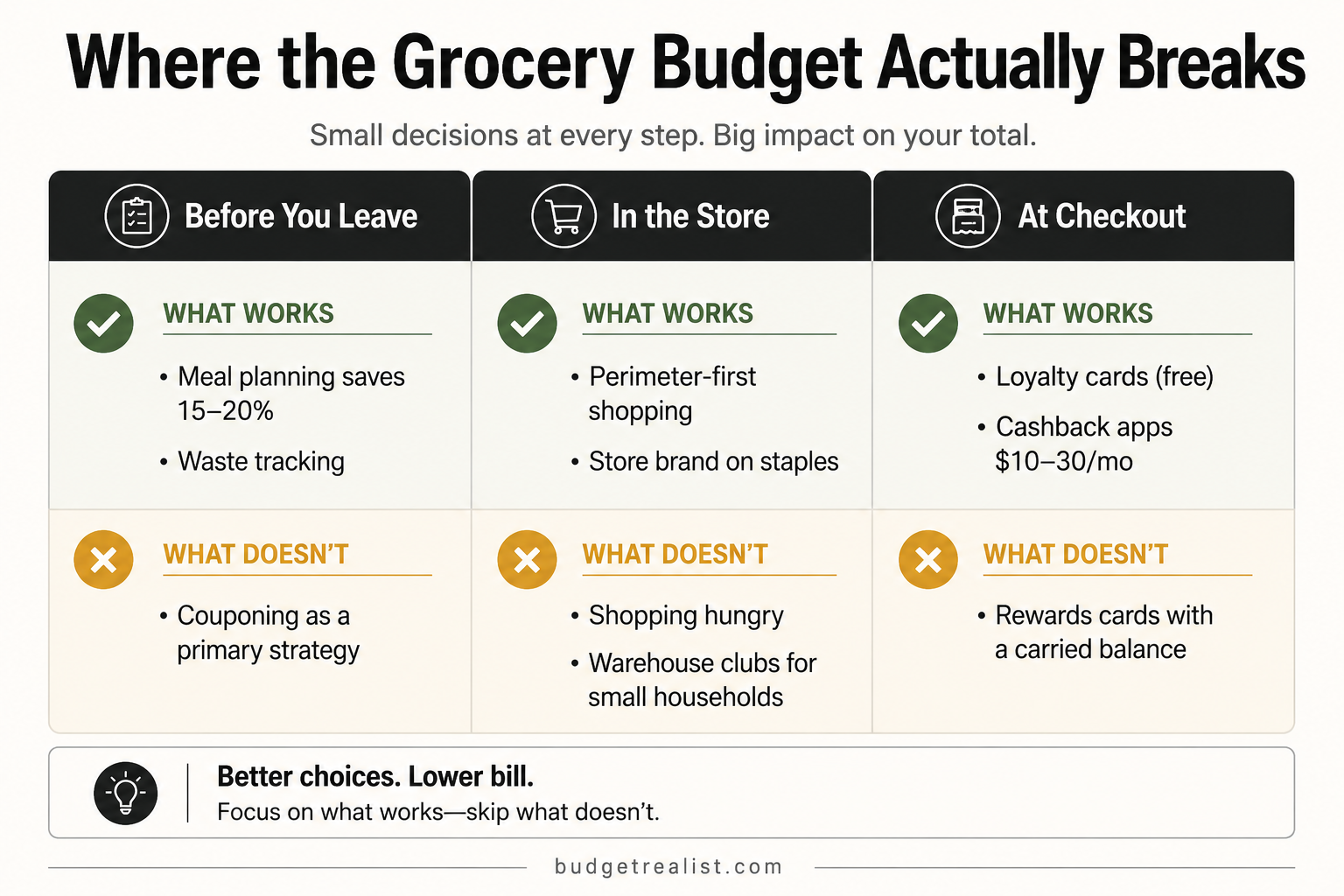
The full breakdown is in this guide to saving money on groceries, including the specific moment in the shopping trip where most budgets break.

Realistic monthly saving: $78 to $156

HIGH LEVERAGE TOTAL

Subscriptions ($80-200) + insurance ($40-80) + phone ($40-120) + groceries ($78-156) = $238 to $556 per month from five frugal living hacks, before touching anything else. That’s where to start.

MEDIUM LEVERAGE

Medium-Leverage Frugal Living Hacks: Worth Doing After the Big Ones

These frugal living hacks save real money but require more consistent behavioral change than a one-time audit or phone call. Worth implementing once the high-leverage items are handled.

Hack 6: Switch delivery orders to pickup

Delivery fees, service fees, and tip prompts add 50 to 80% to the cost of any food order. A $15 meal costs $22 to $28 via delivery. Switching to pickup on two orders per week saves roughly $18 per week, or $936 per year with zero change to what you eat.

Realistic monthly saving: $60 to $100

Hack 7: Use cashback apps on purchases you were already making

Ibotta, Fetch, and Rakuten give real money back on groceries, gas, and online purchases. The rule: only activate offers for items already on your list. The moment you buy something because of a cashback offer, it stops being a saving and becomes a spending trigger.

Used correctly, Ibotta returns $10 to $30 per month on a normal grocery run. Rakuten returns 1 to 15% cashback on online purchases at thousands of retailers. Both are free and take five minutes to set up.

Realistic monthly saving: $20 to $60

Hack 8: Buy quality used instead of cheap new

For furniture, clothing, tools, electronics, and kitchen equipment, buying secondhand from Facebook Marketplace, ThredUp, or local thrift stores typically costs 20 to 70% less than new. A well-made secondhand item outlasts a cheap new one by years.

The frugal living hack here is not “buy used always.” It’s “buy quality always, and quality used is almost always cheaper than quality new.” A $40 cast iron skillet from a thrift store lasts longer than a $40 nonstick pan from a discount retailer.

Realistic monthly saving: $30 to $100 for households who buy clothing and household items regularly

Hack 9: Automate savings before you can spend them

Saving whatever is left at the end of the month means saving nothing, because there is never anything left. The pay yourself first method flips this: a fixed amount moves to savings automatically on payday before any discretionary spending happens.

Even $50 per payday adds up to $1,300 per year. At $150, it’s $3,900. The behavioral trick is that money you never see hit your checking account doesn’t feel like a loss. Here’s how to set it up in one step.

Monthly saving: Whatever you set it at, because it happens automatically

Hack 10: Batch cook one item per week

One pot of grains, one batch of protein, or one large soup per week eliminates the most expensive meal in most budgets: the weekday lunch bought out of necessity because there’s nothing ready at home.

A batch of chicken thighs ($12) covers lunches for two people for three days. The individual restaurant lunch costs $12 per person per day. The math compounds over a month into $150 to $250 in savings from one weekly habit.

Realistic monthly saving: $80 to $150

LOW LEVERAGE

Low-Leverage Frugal Living Hacks: Fine to Do, Not Worth Prioritizing

These are the frugal living hacks that get the most coverage online and save the least money. Not wrong. Just wildly overhyped relative to the effort involved and the dollar return.

Making your own cleaning products

Vinegar and baking soda work for some tasks. The saving versus buying store-brand cleaning products is $5 to $10 per month. Do this if you enjoy it. Don’t do it as a primary frugality strategy.

Extreme couponing

Professional couponers save real money, but 5 to 10 hours per week is the time investment for people who do it seriously. At minimum wage that time is worth $50 to $100. The savings need to exceed the time cost. For most people the math doesn’t work. Use coupons on items already on your list. Don’t build your grocery strategy around them.

Skipping coffee

A $5 daily coffee is $150 per month, which is real money. But if you’re paying $200 a month more than necessary on car insurance and haven’t called to fix it, the coffee is not your problem. Fix the big leaks first.

Generic toothpaste and toiletries

Fine. Worth doing. Saves $10 to $20 per month. Do it. But don’t let it make you feel like you’re doing frugal living when the subscription audit hasn’t happened yet.

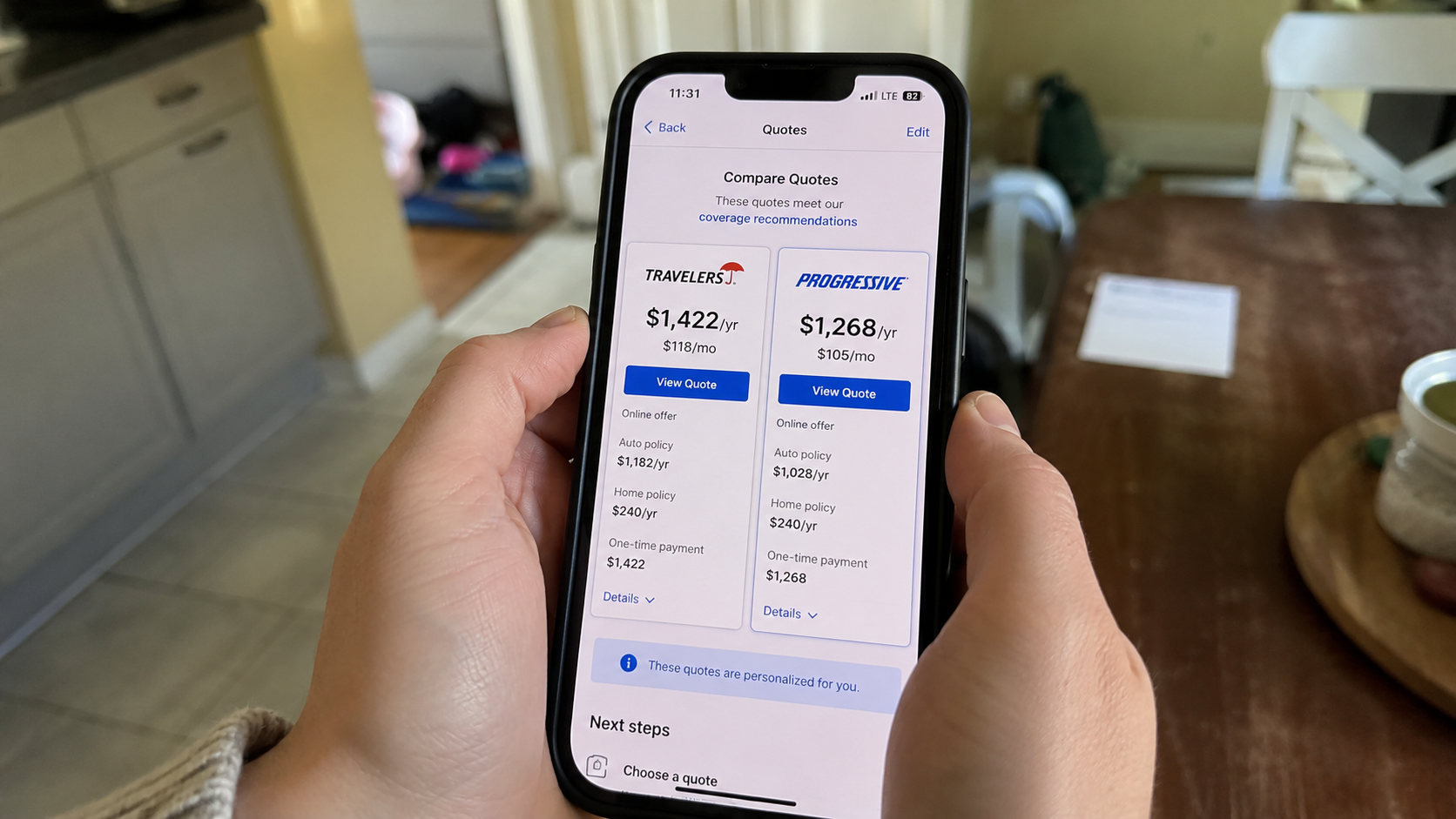
frugal living hacks: hands holding phone showing insurance comparison quotes side by side on screen

WHERE TO START

How to Actually Use These Frugal Living Hacks

The order matters. Start with the hacks that require a one-time action and produce ongoing savings.

01
This week: subscription audit

Open your bank and credit card statements. Highlight every recurring charge. List them. Cancel anything unused. Rotate streaming services to one at a time. One hour of work, $80 to $200 per month saved permanently.

02
This month: phone plan and insurance

Get one quote on a cheaper phone plan. Get one comparison quote on car insurance. Make the calls. Two hours of work for a potential $100 to $200 in monthly savings that compounds every month going forward.

03
Ongoing: food and spending habits

Meal planning, delivery-to-pickup switches, batch cooking, and cashback apps. Layer these in one at a time over four to six weeks. Each becomes automatic quickly.

REALISTIC TOTAL

High-leverage hacks alone: $238 to $556 per month. Add medium-leverage habits: another $200 to $400. Combined annual saving: $5,256 to $11,472 per year from frugal living hacks already available to most households.

BOTTOM LINE

Frugal Living Hacks That Actually Work Start With the Big Numbers

The frugal living hacks that change budgets are not the ones that get the most blog coverage. They’re the ones that touch the biggest line items: housing costs, insurance, phone plans, subscriptions, and food. These are the categories where households consistently overpay by the largest margins, and where a one-time fix produces ongoing savings with no further effort.

The DIY cleaning products and skipped coffees are fine. Do them if they suit your life. But do them after the subscription audit, not instead of it.

Once the savings are freed up, the next question is what to do with them. Here’s where to keep your savings so they actually earn something while you build toward whatever comes next. And if you want a budgeting system that makes frugal living automatic rather than effortful, this guide to choosing the right budgeting method will match you with the one that fits how you actually live.

15 Ways to Save Money on Groceries: Ranked by Actual Dollar Impact

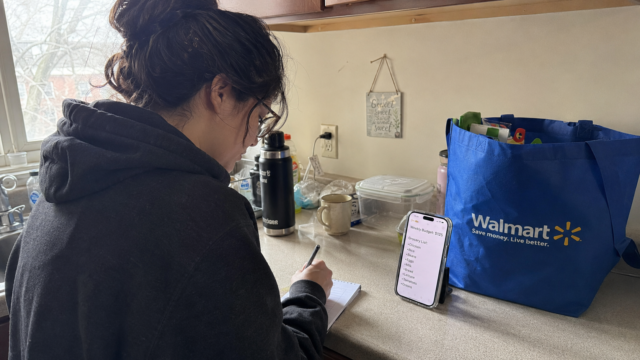
person writing grocery list at kitchen counter with phone showing weekly budget

The average American household spends $519 a month on groceries, according to the BLS Consumer Expenditure Survey. That is $6,228 a year. And the USDA Food Price Outlook projects food-at-home prices will rise another 3.1% in 2026.

Most people respond by trying harder: more coupons, more store-brand swaps, more willpower at checkout. None of that is wrong. But it is also not where the real money is going.

These 15 ways to save money on groceries are ranked by realistic monthly dollar impact, not by how often they get mentioned in listicles. The ones at the top move the number. The ones at the bottom are still worth doing, just not worth starting with.

THE LIST

Ways to Save Money on Groceries: All 15 Ranked

01
Reduce food waste first

Realistic monthly saving: $60 to $120 per household

The EPA estimates the average American wastes $728 per person per year on food they buy and never eat. That is $60 a month, per person, going directly in the bin. For a two-person household, that is $120 a month in food waste before a single bad spending decision is made.

This is the most overlooked way to save money on groceries because it requires no sacrifice, only attention. Before your next shop, open the fridge and write down what needs to be used this week. Build at least two meals around those ingredients. The savings are immediate.

02
Meal plan before every shop

Realistic monthly saving: $78 to $104

Research consistently shows that households that meal plan spend 15 to 20% less on food overall. On a $519 monthly grocery bill that is $78 to $104 a month, or roughly $1,000 a year, from one habit that takes ten minutes a week.

The mechanism is simple. Plan five dinners before writing the list. Buy exactly what those five dinners need. When you skip this step, you buy ingredients for three dinners loosely, cook two of them, and throw out everything that was supposed to become dinner three.

THE ACTUAL MOVE

Before writing the shopping list, check what you already have. Build meals around what needs to be used first. This alone cuts waste by a third for most households, because half the food you buy to replace something you think you’re out of is already in the back of the cabinet.

03
Switch your primary store to Aldi or Walmart

Realistic monthly saving: $60 to $150

Store selection is the most underleveraged way to save money on groceries. Most people shop at whatever store is most convenient and never reconsider it. A 2025 Ramsey Solutions analysis found Aldi prices averaging 14 to 40% lower than conventional supermarkets on comparable items.

For staples like produce, dairy, eggs, canned goods, and frozen vegetables, Aldi is hard to beat. Most households that switch save $80 to $150 per month without changing what they eat. Walmart Grocery consistently beats traditional supermarkets on name-brand pricing and is the better option for households who want low prices without Aldi’s limited selection.

04
Set a dollar limit before you leave the house

Realistic monthly saving: $30 to $80 (stops budget creep)

Most people go to the grocery store with a list but no budget. The list tells you what to buy. The budget tells you when to stop. Without a specific number in mind, every extra item feels individually reasonable and collectively expensive.

Write the number down before you leave. Track your running total as you shop. This sounds tedious and stops being tedious after three or four shops, because you develop an accurate intuitive sense of what things cost. Most people who do this for a month find they never need to tally again.

05
Switch 10 to 15 staples to store brand

Realistic monthly saving: $30 to $60

On canned goods, pasta, rice, oils, frozen vegetables, cleaning products, and paper products, store brand quality is functionally identical to name brand in most categories. The price difference is 20 to 40% lower.

The approach that works: look at your last receipt, identify 10 items you buy every week without variation, switch those to store brand. Notice which ones you cannot tell the difference on. Keep those switches permanently. Switch back on anything you actually care about. Within a month you have a permanent list of swaps that save $30 to $60 every shop with no real compromise.

ways to save money on groceries breakdown showing 15 tactics ranked by dollar impact

06
Shop the perimeter of the store first

Realistic monthly saving: $20 to $50 (blocks impulse spending)

The perimeter of most grocery stores is produce, meat, dairy, and bread. These are whole ingredients. The interior aisles are mostly processed and packaged goods, which carry significantly higher margins for the store and significantly lower nutritional density for you.

Shop the perimeter first, with your list. Go into the interior aisles only for specific items you planned for. Getting what you need from the perimeter before entering the aisles means you have already filled most of the cart with intentional purchases before you hit the most heavily marketed products in the store.

07
Use your store’s loyalty card

Realistic monthly saving: $15 to $40

Every major grocery chain has a free loyalty card that unlocks member pricing. If you shop at Kroger, Safeway, Albertsons, or any regional chain and you are not using their loyalty program, you are paying the non-member price on dozens of items every shop. The sign-up takes two minutes and the savings are immediate.

Kroger’s loyalty program includes fuel points on top of grocery discounts. Safeway’s Just for U program personalizes offers based on what you actually buy. These are not gimmicks. They return real money on items you were already buying.

08
Use cashback apps on items already on your list

Realistic monthly saving: $10 to $30

Ibotta and Fetch are the two worth using. Ibotta works by activating offers before shopping and scanning receipts after. Fetch gives points on any receipt from any store, redeemable for gift cards. Both can realistically return $10 to $30 a month on a normal grocery run with zero change to what you buy.

The rule applies strictly: only activate offers for things already on your list. The moment you buy something because there is a cashback offer on it, you have turned a saving into a spending trigger.

09
Eat before you shop

Realistic monthly saving: $15 to $40 (stops hunger impulse buys)

This is not a wellness tip. It is a financial one. Studies consistently show people buy more calories, more impulse items, and more expensive convenience foods when shopping hungry. A $12 rotisserie chicken that was not on the list because you smelled it walking past the deli is a $12 leak that no coupon will recover.

Eat before you shop, every time. It is one of the simplest ways to save money on groceries with zero ongoing effort.

10
Buy frozen vegetables instead of fresh for cooking

Realistic monthly saving: $15 to $35

Frozen vegetables are picked and frozen at peak ripeness, which means nutritional content is comparable or better than fresh produce that has been sitting in transit and on shelves for days. The price per serving is significantly lower, and there is no spoilage.

Fresh vegetables make sense where texture matters, like salads and crudites. For everything cooked, soups, stir fries, casseroles, pasta dishes, frozen is functionally identical and meaningfully cheaper. Switching half your vegetable buying to frozen saves $15 to $35 a month for most households.

11
Plan lunches around dinner leftovers

Realistic monthly saving: $20 to $50

Lunch is where grocery budgets bleed quietly. Buying sandwich ingredients, snacks, and convenience lunch items for five days a week adds up fast and produces a disproportionate amount of waste because people’s lunch habits are inconsistent.

Cook slightly more at dinner. Eat it for lunch the next day. This eliminates an entire shopping category and reduces the likelihood of grabbing something expensive because there is nothing easy at home. For a two-person household, this saves $20 to $50 a month without any meaningful sacrifice.

12
Use coupons only on items already on your list

Realistic monthly saving: $5 to $20

Coupons are not bad. But they are the wrong thing to optimize for when you are trying to cut your grocery bill meaningfully. A 50 cent coupon on a $4 item saves 12.5%. Finding out you already have two of that item at home saves 100%.

Coupons reward buying more of things. Most grocery budgets are already buying too much of things. Use coupons only on items that are on your list anyway. Do not let them dictate the list. That is the line between saving and spending.

2026 TARIFF NOTE

Tariffs on imported goods in 2026 are pushing above-trend price increases on coffee, cocoa, tropical fruits, and some seafood. If those are staples in your household, expect your grocery bill to feel higher than the USDA benchmarks suggest, and prioritize substitutes where you can.

13
Skip organic except where it matters to you specifically

Realistic monthly saving: $15 to $40

Organic produce costs 20 to 100% more than conventional for nutritionally comparable food. If budget is the primary concern, conventional is the right choice across the board. If you have strong preferences about specific items, buy organic selectively on those and conventional on everything else.

Most people who audit their organic buying find three or four items they genuinely care about and a dozen they were buying out of habit. Keeping the three, dropping the dozen, saves real money with no real sacrifice.

14
Use bulk buying selectively on non-perishables

Realistic monthly saving: $10 to $30 (when used correctly)

Costco and Sam’s Club are genuinely cheaper per unit on many items. But the savings only materialize if you actually use what you buy before it expires. A 5lb bag of spinach is not cheaper per ounce if you throw out 3lbs of it.

Bulk buying makes sense for: non-perishables you go through reliably, paper products, canned goods, rice, pasta, cooking oil, and households of three or more people. It does not make sense as a general grocery strategy for smaller households or for anything perishable that exceeds your realistic weekly consumption.

15
Plan your first shop of the month around a pantry audit

Realistic monthly saving: $20 to $40

Most households have $50 to $100 worth of food sitting in their pantry at any given time that never gets used because it gets pushed to the back and forgotten. The pattern that shows up constantly: buying a second jar of something you already had, or buying ingredients for a recipe you never cooked and never will.

Once a month, before the first major shop, do a full pantry and freezer audit. Write down everything. Build two or three meals entirely from what you find. Then shop only for what those meals are missing plus your weekly list. One habit, once a month, consistently returns $20 to $40 in food you would have otherwise replaced.

THE SCORECARD

All 15 Ways to Save Money on Groceries: Dollar Impact at a Glance

Tactic Monthly Saving Effort
Reduce food waste $60 to $120 Low
Meal planning $78 to $104 Low (10 min/week)
Switch to Aldi or Walmart $60 to $150 One-time decision
Set a dollar limit before leaving $30 to $80 Low
Store brand on 10-15 staples $30 to $60 None once habit forms
Shop perimeter first $20 to $50 None
Loyalty card $15 to $40 One-time setup
Cashback apps (Ibotta, Fetch) $10 to $30 Low
Eat before shopping $15 to $40 None
Frozen veg instead of fresh for cooking $15 to $35 None
Leftovers for lunch $20 to $50 Low
Coupons on list items only $5 to $20 Low
Skip organic selectively $15 to $40 One-time audit
Selective bulk buying $10 to $30 Medium
Monthly pantry audit $20 to $40 Low (once/month)
REALISTIC TOTAL

Running all 15 together, a typical household can realistically save $200 to $350 per month on groceries. That is not a coupon strategy. That is a system where every habit compounds on the last one.

WHERE TO START

How to Actually Use These Ways to Save Money on Groceries

Do not try to implement all 15 in the same week. That is how grocery saving projects become abandoned grocery saving projects.

Start with the top three: reduce waste, meal plan, and switch your primary store. Those three alone move most households $150 to $200 per month before anything else changes. Once those are running automatically, layer in the store brand swaps, the loyalty card, and the cashback apps.

By the time all 15 habits are in place, you are looking at a fundamentally different relationship with the grocery store. Not a tighter one, a smarter one.

person using cashback app at grocery checkout as one of 15 ways to save money on groceries

BOTTOM LINE

The Ways to Save Money on Groceries That Actually Move the Number

Waste reduction and meal planning are where the real money is. Everything else is optimization on top of a foundation that either exists or doesn’t. Get those two right first, then build the rest of the system around them.

The grocery bill is one of the fastest-moving levers in a household budget because it is a recurring expense with compounding returns. Every week you run the system, you save again. Every week you do not, you do not.

If you want to go deeper on the store selection decision, this breakdown of the 4 decisions that cut your grocery bill covers the framework behind where to shop and how to benchmark your spending against USDA data. And if the grocery bill is part of a bigger budget problem, this guide to cutting monthly expenses covers the full picture.

Where to Keep Your Savings: The Right Account for Every Goal

person checking savings account rates on phone to decide where to keep savings

Most people keep all their savings in one place. A regular savings account at whatever bank they opened when they were 18, earning somewhere around 0.40% APY, never reviewed, never moved.

That account is costing them money every month. Not dramatically. Just quietly, steadily, in a way that’s easy to ignore until you do the math.

On $10,000, the difference between a 0.40% savings account and a 4.00% high-yield account is $360 a year. On $25,000 it’s $900. The money is just sitting there. It could be doing something.

But the bigger problem isn’t rate. It’s that most people have multiple types of savings with different timelines and different rules, and they’re all in the same account. Emergency money mixed with vacation money mixed with a vague sense that there’s something in there for a down payment someday. When everything shares one account, nothing is protected.

Where to keep your savings isn’t one question. It’s three, depending on when you’ll need the money.

THE FRAMEWORK

The Right Way to Think About Where to Keep Your Savings

Every dollar you save belongs to one of three buckets. Get this wrong and the right account doesn’t matter.

Bucket 1: Emergency money. This needs to be liquid, boring, and separate from everything else. You’re not trying to grow it. You’re trying to protect it from yourself and from bad timing. Three to six months of essential expenses. Untouchable until something actually breaks.

Bucket 2: Goal money. Money you’re building toward something specific: a car, a trip, a security deposit, a down payment. It has a name and a deadline. It should earn a real return. But it needs to stay accessible because you’re going to spend it.

Bucket 3: Long-term money. Money you won’t touch for more than a year, maybe several. A house fund that’s three years out. A baby fund. A career pivot fund. Here you can trade some liquidity for a better rate.

The accounts are different for each bucket. Putting bucket 1 money in a CD because the rate is better is a mistake. Putting bucket 3 money in a checking account because it’s convenient is a more expensive one.

THE RULE

Match the account to the timeline. Emergency money needs liquidity above all else. Goal money needs a real return and easy access. Long-term money can lock in a rate because you know you won’t need it soon.

THE ACCOUNTS

Where to Keep Your Savings: 4 Account Types Explained

These are the four accounts worth knowing about. One note before the breakdown: none of these are investments. You’re not trying to beat the market here. You’re trying to not lose ground to inflation while keeping your money safe and accessible.

1. High-Yield Savings Account (HYSA)

The default answer for most people in most situations. Online banks offer between 3.80% and 4.20% APY in May 2026, which is 50 to 60 times what a standard checking account pays and roughly 6 to 10 times the national savings account average of 0.61%.

HYSAs are FDIC-insured up to $250,000 per depositor. No monthly fees at the good ones. No minimums. Transfers to your linked checking account typically take one to two business days.

The slight delay is a feature for emergency funds. It kills impulse withdrawals. You can still get the money when you actually need it. You just can’t spend it because a sale ends tonight.

Best for: Emergency fund. Short-term goal savings (under 12 months). General savings buffer.

Not ideal for: Money you need same-day. Money you won’t touch for 2+ years (better options exist).

For a full breakdown of which accounts are worth opening right now, the best high-yield savings accounts in 2026 covers each one with current rates, conditions, and what to watch for in the fine print.

2. Money Market Account (MMA)

A money market account is similar to a HYSA but typically comes with check-writing privileges and a debit card. Rates in 2026 are generally in line with HYSAs, around 4.00% APY at competitive banks.

The main reason to use one over a HYSA is if you want the option to write a check or pay something directly from the account without first transferring to checking. Some people use them as a more functional emergency fund for this reason.

The downside: MMAs sometimes have higher minimum balance requirements to earn the advertised rate. Read the fine print before opening.

Best for: Emergency fund if you want debit card access. Short-term savings with occasional direct withdrawals.

Not ideal for: Long-term savings. Goal money where the debit card access creates temptation.

3. Certificate of Deposit (CD)

A CD locks your money for a fixed term in exchange for a guaranteed rate. Top short-term CDs in May 2026 are offering 3.30% to 3.75% APY on 3 to 12-month terms. Longer-term CDs offer slightly more, but the rate advantage over a HYSA has narrowed considerably since 2023 and 2024.

The defining constraint: early withdrawal penalties. Pull the money before the term ends and you give back a chunk of the interest earned. This makes CDs completely wrong for emergency funds and only appropriate for money you know you won’t need until a specific date.

The CD ladder approach solves the rigidity problem. Instead of putting $10,000 in one 12-month CD, you put $2,500 in a 3-month, $2,500 in a 6-month, $2,500 in a 9-month, and $2,500 in a 12-month. As each one matures, you have the option to spend it or roll it into a new CD. You get the rate lock without locking everything up at once.

Best for: Money you won’t need for 6 to 24 months. A down payment fund with a known timeline. Disciplined savers who benefit from the early-withdrawal deterrent.

Not ideal for: Emergency funds. Goal money with a flexible timeline. Anyone who might need to access the funds unexpectedly.

4. Treasury Bills (T-Bills)

T-bills are short-term US government debt. You buy them at a slight discount, they mature at face value, and the difference is your return. Three to six-month T-bills are currently yielding around 3.60% in May 2026.

The main advantage over a HYSA is tax treatment. T-bill interest is exempt from state and local income taxes. In a high-tax state like California or New York, that exemption can make the after-tax yield competitive with or better than a HYSA even at a nominally lower rate.

You can buy T-bills directly through TreasuryDirect or via ETFs like SGOV or BIL through any brokerage account.

Best for: High-tax state residents. Large cash reserves where the state tax exemption adds up. Savers comfortable with a brokerage account.

Not ideal for: Emergency funds. Anyone who needs same-day or next-day access. First-time savers who want simplicity.

RATE COMPARISON

Where to Keep Your Savings: Current Rates at a Glance

Account Type Current APY (May 2026) Liquidity Best For
Checking account 0.07% (national avg) Instant Daily spending only
Regular savings account 0.61% (national avg) 1 to 2 days Almost nothing at this rate
High-yield savings (HYSA) 3.80% to 4.20% 1 to 2 days Emergency fund, short-term goals
Money market account ~4.00% Same day (debit card) Emergency fund, flexible access
CD (3 to 12 month) 3.30% to 3.75% Locked (penalty to exit) Goal money with fixed timeline
T-bills (3 to 6 month) ~3.60% Locked until maturity High-tax states, large cash reserves

Rates as of May 2026. Sources: FDIC for national averages, top HYSA rates from Ally, Marcus, and SoFi.

where to keep your savings decision chart by goal timeline and account type

BY GOAL TYPE

Where to Keep Your Savings Based on What You’re Saving For

Emergency fund

High-yield savings account at a different bank from your checking. Online banks like Ally, Marcus, and SoFi are the standard picks. The 1 to 2 day transfer time is intentional friction, not a drawback. It stops the fund from being raided for non-emergencies.

Do not use a CD for your emergency fund. An early withdrawal penalty on the one account you need in an actual emergency is exactly the wrong design.

Target: $1,000 to start. Three to six months of essential expenses as the final goal. Here’s how to build an emergency fund step by step.

If you’re also confused about how an emergency fund differs from a regular savings account, this breakdown of emergency fund vs savings account covers the distinction and why it matters in practice.

Short-term goal (under 12 months)

High-yield savings account. Same type of account as the emergency fund, but at a different bank and named specifically for the goal. “Vacation fund.” “Car repair buffer.” “Moving costs.” The name creates psychological separation from the emergency fund and from daily spending money.

You want this accessible because the date you’ll spend it is close and the timeline can shift.

Medium-term goal (12 to 36 months)

HYSA or CD ladder, depending on how fixed the timeline is. If you know you’re buying a car in exactly 18 months, a CD maturing around that date locks in a rate. If the timeline is fuzzy, a HYSA gives you flexibility without a significant rate penalty in the current environment.

For goals in this range, a simple split works well. Keep 50% in a HYSA for flexibility and put 50% in a 12 to 18 month CD for the rate lock. You get both.

Long-term cash reserve (3+ years)

A CD ladder or T-bills if you’re in a high-tax state. At three or more years out, you have enough visibility into the timeline to commit to fixed terms without worrying about needing the money earlier than expected.

Note: at three or more years, it’s also worth asking whether this money belongs in a cash account at all or whether it should be invested. That’s a different conversation. If the answer is definitely cash, a ladder approach gives you the best combination of yield and periodic access.

notebook with savings buckets written out next to a laptop showing bank account balances

IMPORTANT

If you’re comparing specific banks for your HYSA, some have conditions buried in the fine print. SoFi’s 4.50% APY requires a qualifying direct deposit. Without it, you earn 1.00%. Always check the requirements before opening. Here’s a side-by-side comparison of Ally vs Marcus vs SoFi.

COMMON MISTAKES

Where to Keep Your Savings: 4 Mistakes That Cost Real Money

Mistake 1: Keeping everything in a big-bank savings account

The national average savings rate is 0.61% APY. Most big banks (Chase, Wells Fargo, Bank of America) pay close to that average or less. There is no reason to keep savings there except inertia. Online banks offer the same FDIC insurance, better rates, and comparable transfer speeds. The only thing the big bank offers is a branch you probably never visit.

Mistake 2: Mixing emergency money and goal money in one account

When both live together, the emergency fund always loses. It gets spent on a flight deal or a TV sale or Christmas and then isn’t there when the furnace dies. Separate accounts with separate names solve this with no additional cost. Most banks let you open multiple savings accounts for free.

Mistake 3: Locking emergency money in a CD

Chasing an extra 0.20% in exchange for an early withdrawal penalty on the one account that needs to be available immediately is a bad trade. Emergencies don’t give you 12 months’ notice.

Mistake 4: Not knowing what rate you’re currently earning

Most people have no idea what their savings account actually pays. Log in and check. If the number has a zero before the decimal point, the account is costing you money relative to what’s available. The switch takes about ten minutes and pays for itself in days.

WILL RATES DROP

Will HYSA Rates Stay This High?

Probably not forever. The Fed cut rates three times in late 2025 and has held steady in 2026. The current federal funds target range is 3.50% to 3.75%. The next Fed meeting is June 17, 2026.

When the Fed cuts, HYSA rates follow within weeks. The question is how fast and by how much. Nobody can tell you with certainty, and anyone who claims they can is guessing.

What is knowable: sitting in a 0.61% savings account waiting to see what happens is costing you roughly $340 a year per $10,000 saved compared to a 4.00% HYSA. Every month you wait to move the money is money you don’t get back.

Even if rates drop to 3.00% over the next 12 months, that’s still nearly five times the national average. The case for moving your savings doesn’t depend on rates staying exactly where they are.

BOTTOM LINE

The Short Answer on Where to Keep Your Savings

For most people the answer is simple: a high-yield savings account at an online bank, with separate accounts for the emergency fund and each savings goal.

That one move, switching from a standard savings account to a HYSA and separating the accounts by purpose, covers 90% of what needs to happen. Everything beyond that (CDs, T-bills, laddering) is optimization for when the basics are already running.

Start there. Pick an account. Move the money. Name the buckets. The optimization can wait.

If you’re not sure which HYSA to open, this breakdown of the best high-yield savings accounts right now compares the top options with current rates and conditions. If you haven’t started your emergency fund yet, here’s how to build one from zero. And if you’re still deciding which budgeting method will free up room to save in the first place, this guide to choosing the right budgeting method will help.

Best Side Hustles From Home: 12 That Actually Pay in 2026

best side hustles from home setup showing laptop and notebook on a kitchen table in morning light

The moment you realize your paycheck is not keeping up with your bills is specific. Mine was a Tuesday in February, staring at a grocery receipt that was $60 more than it had been a year ago for the same cart of food. I did not need a side hustle to get rich. I needed one to stop the slow bleed.

The best side hustles from home are not about passion projects or building a personal brand. They are about finding something you can do in real hours, from your actual home, that pays a real number into your bank account. This list is filtered by exactly that.

No MLM. No “earn passive income while you sleep” nonsense. No setup costs that wipe out three months of earnings before you see a cent.

38%
Americans with a side hustle
LendingTree, 2025
$400
Median monthly side hustle income
LendingTree, 2025
61%
Say life would be unaffordable without it
LendingTree, 2025

According to LendingTree’s 2025 Side Hustle Survey, the median side hustle earns $400 a month, but the average is $1,215. That gap is real. The difference is almost always which hustle they picked and whether they treated it like a job from day one.

THE LIST

The Best Side Hustles From Home in 2026

These are ranked by realistic earning potential for someone starting from zero with no existing audience and no specialist equipment.

01
Freelance writing and copywriting

Realistic monthly earning: $500 to $3,000+

Freelance writing has the lowest barrier to entry of any skilled side hustle. You need a laptop, an internet connection, and the ability to write clearly. The ceiling is high because good writers who can produce SEO content, email copy, or product descriptions are consistently in demand from small businesses that cannot afford a full-time hire.

Start on Upwork or through cold outreach to small business owners in niches you already know. The first three months are the hardest because you are building a portfolio with no portfolio. Take lower-paid work initially, do it well, collect testimonials, raise your rates. Most freelance writers who treat it seriously clear $1,000 a month within six months.

THE MOVE

Pick one niche before you start pitching. “I write for SaaS companies” gets replies. “I write anything” gets ignored. Specialization is how you charge more faster.

02
Virtual assistant work

Realistic monthly earning: $600 to $2,500

Virtual assistants handle the operational overflow for small business owners: inbox management, scheduling, research, data entry, customer service, social media posting. It is not glamorous work, but it is steady and the demand is consistent. Rates typically run $15 to $35 per hour depending on the tasks involved.

The best places to find VA work are Belay, Time Etc, and Upwork. If you have any background in admin, operations, or customer service, you already have the skills. The only thing you need to add is reliability, which is what most clients are actually paying for.

03
Online tutoring

Realistic monthly earning: $400 to $2,000

If you have a degree, teaching experience, or genuine expertise in any subject, online tutoring is one of the most direct best side hustles from home available. Platforms like Wyzant, Tutor.com, and Varsity Tutors connect you with students who are already looking. Rates range from $20 to $80 per hour depending on the subject and level.

04
Bookkeeping and accounting

Realistic monthly earning: $1,000 to $4,000

Small businesses need bookkeeping done every month and most of them hate doing it themselves. If you have any accounting background or are willing to get a QuickBooks certification (roughly 10 to 20 hours of study, around $150 for the certification), you can pick up two or three small business clients and earn $300 to $500 per client per month for work that takes a few hours.

This is one of the highest-earning home side hustles with the lowest startup cost relative to earnings. Most clients are found through local small business networks, LinkedIn, or accountant referral networks.

05
Selling on Etsy or eBay

Realistic monthly earning: $200 to $2,000

Etsy works for digital products (printables, templates, SVG files, planners) or handmade physical goods. Digital products are the better starting point because you make them once and sell them repeatedly with no fulfillment work. A well-optimized Etsy shop selling printable budget planners or wall art can earn $300 to $800 a month passively after the initial setup investment.

eBay works best if you have a source of inventory: thrift store finds, storage unit auctions, or clearance items you can resell at a margin. Many people start by selling things they already own and build from there.

06
Transcription and captioning

Realistic monthly earning: $200 to $800

Transcription pays $0.45 to $1.50 per audio minute depending on the platform and difficulty. It requires no skills, no pitching, and no client relationships. You sign up, pass a short test, and start taking work. Rev and Scribie are the main platforms.

This is genuinely entry-level. If you type fast and have a good ear, you can earn $200 to $400 a month working evenings. It is not a long-term earner but it is one of the fastest ways to start seeing money from home with no setup at all.

WORTH KNOWING

Transcription rates have compressed over the past two years as AI tools have improved. The human-reviewed market still pays, but do not build a long-term income plan around it. Use it to build cash while you develop a higher-skill hustle.

07
Social media management

Realistic monthly earning: $500 to $2,500

Small businesses know they should be posting consistently on Instagram and Facebook. Most of them do not have time to do it and do not want to hire a full-time employee for it. A social media manager who handles content creation, scheduling, and basic engagement for $500 to $800 per month per client is an easy yes for a business that would otherwise pay a full-time hire $3,000 to $4,000 a month.

You need basic graphic design skills (Canva is sufficient), an understanding of what performs on each platform, and the ability to write short-form copy. Two clients at $600 each is $1,200 a month for roughly 10 to 15 hours of work per week.

08
Online surveys and user testing

Realistic monthly earning: $50 to $200

This is the lowest earner on the list and the one most overhyped by get-rich-quick content. Survey platforms like Swagbucks, Survey Junkie, and UserTesting pay real money for real time, but the ceiling is low. UserTesting pays $10 per 20-minute session with limited availability. Survey platforms pay $1 to $5 per survey with unpredictable frequency.

The honest case for including it: it requires zero skill, zero setup, and can be done in dead time. Use it to fund a specific small goal, not as a primary income source.

09
Proofreading and editing

Realistic monthly earning: $400 to $1,800

If you have a strong command of grammar and an eye for detail, proofreading is a legitimate side hustle with a real market. Students, small business owners, bloggers, and self-publishing authors all need proofreaders. Rates run $0.01 to $0.03 per word for proofreading and $0.03 to $0.07 per word for developmental editing.

You can start without formal training by building a portfolio through Fiverr, Reedsy, or direct outreach to self-publishing communities on Reddit and Facebook.

10
Selling digital products

Realistic monthly earning: $100 to $2,000+ (passive after setup)

Digital products are the closest thing to genuine passive income that actually works. You create a template, spreadsheet, guide, preset, or course once, list it on Gumroad or Etsy, and collect payments without fulfillment work. The catch is that without an audience or SEO traffic pointing to your product, you will sell nothing.

The realistic path: build one digital product tightly focused on a specific problem, price it between $7 and $29, list it on Etsy (which has built-in search traffic), optimize the listing with keywords, and build from there. The first $100 takes the longest. The next $100 takes less.

11
Remote customer service

Realistic monthly earning: $800 to $1,800

Companies like Amazon, Apple, and hundreds of mid-sized e-commerce businesses hire remote customer service contractors. Pay runs $12 to $18 per hour. The work is handling calls, chats, or emails for products you did not make, which is not exciting, but the hours are defined, the pay is reliable, and you can do it entirely from home.

This is the most job-like option on this list. If what you need is predictable income rather than entrepreneurial upside, it is one of the most reliable best side hustles from home for people who want structure over flexibility.

12
Freelance graphic design

Realistic monthly earning: $600 to $3,500

If you can use Canva at an advanced level or have experience with Adobe software, freelance graphic design is a high-demand skill. Social media graphics, logo design, pitch deck design, and email template design are all consistently needed by small businesses. Fiverr, 99designs, and direct outreach to small businesses are the main acquisition channels.

The difference between a $15 per hour designer and a $60 per hour designer is usually specialization and portfolio quality, not raw skill. Pick one deliverable type, build five strong portfolio examples, and price confidently.

QUICK COMPARISON

All 12 Side Hustles From Home at a Glance

Side Hustle Monthly Potential Skill Required Time to First Dollar
Freelance writing $500 to $3,000+ Medium 1 to 4 weeks
Virtual assistant $600 to $2,500 Low to medium 1 to 3 weeks
Online tutoring $400 to $2,000 Medium 1 to 2 weeks
Bookkeeping $1,000 to $4,000 High 2 to 6 weeks
Etsy / eBay selling $200 to $2,000 Low to medium 2 to 6 weeks
Transcription $200 to $800 Low Days
Social media management $500 to $2,500 Medium 1 to 4 weeks
Surveys / user testing $50 to $200 None Same day
Proofreading $400 to $1,800 Medium 1 to 3 weeks
Digital products $100 to $2,000+ Medium 4 to 12 weeks
Remote customer service $800 to $1,800 Low 1 to 3 weeks
Freelance design $600 to $3,500 High 1 to 4 weeks
HOW TO PICK

How to Choose the Right Side Hustle From Home for You

The wrong question is “which side hustle makes the most money.” The right question is “which side hustle can I actually do consistently for the next six months given my current schedule, skills, and energy levels.”

If you have 10 hours a week and no specialized skills, start with virtual assistant work or transcription while you build toward something higher-ceiling. If you have a specific skill like writing, design, or accounting, skip the low-end platforms and go straight to direct client outreach. The fastest path to $500 a month is always leveraging something you already know.

The one mistake that kills most side hustles before they pay anything: treating the first two months like a test you can quit if it does not immediately work. Every income source on this list has a ramp-up period. The people earning $1,200 a month from home are almost always the people who kept going past the point where most people quit.

WHERE TO START

If your goal is $400 to $500 extra per month and you have 8 to 10 free hours per week, virtual assistant work or freelance writing will get you there fastest. If you are willing to invest 3 to 4 months building something with a higher ceiling, digital products or bookkeeping will compound better over time.

The Side Hustles That Actually Pay

The median side hustle earns $400 a month. The average earns $1,215. That gap is not luck. It is which hustle you picked, whether you specialize, and whether you treated it like a real income source from day one. Pick one from this list. Give it 90 days of consistent effort. The money is real, it just does not arrive on day one.

If you are building side income to cover a specific gap in your budget, this guide to cutting monthly expenses covers the other side of the equation. And if grocery costs are part of the pressure, 15 ways to save money on groceries is a good companion read.