




Budgeting

Home Budgeting
Tips and strategies for budgeting your money

The 50 30 20 Rule: Why It Doesn’t Work Anymore (And What to Do Instead)
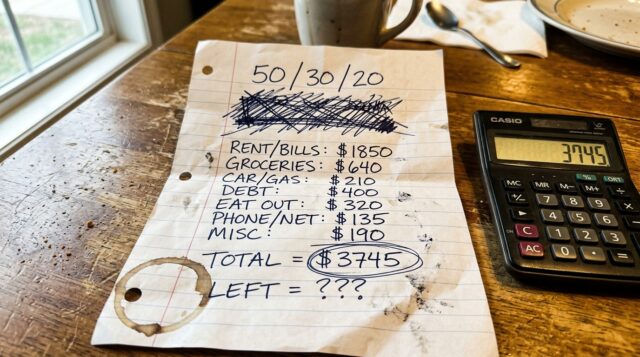
The 50 30 20 rule is everywhere. Personal finance blogs, bank websites, your HR department’s financial wellness email. Split your take-home pay into needs at 50%, wants at 30%, and savings at 20%. Simple, clean, done.

There is just one problem. For a lot of people in 2026, the 50 30 20 rule math does not work. Not because they are bad at budgeting. Because the rule was designed around a cost of living that no longer exists for most people under 40 in any major city.

This is not another article telling you to ditch the 50 30 20 rule entirely. It is an honest look at what the rule gets right, what it gets wrong, and how to adjust it so it actually reflects your life instead of making you feel like a failure every month.

Where It Came From

What the 50 30 20 Rule Actually Is

The rule was popularized by Elizabeth Warren and her daughter Amelia Warren Tyagi in their 2005 book All Your Worth. Warren had spent years studying bankruptcies and noticed a pattern: people were not going broke because of lattes and impulse buys. They were going broke because fixed costs, mainly housing and healthcare, had taken over their budgets.

The 50 30 20 rule was designed as a corrective. Cap your needs at 50% of take-home pay. Keep wants at 30%. Save and pay down debt with the remaining 20%. The insight was sound. The specific percentages made sense for the cost of living in 2005.

That cost of living no longer exists. Research from the Federal Reserve Bank of Cleveland shows rent inflation has consistently outpaced wage growth across most US metros over the past decade, making the 50% needs target increasingly unrealistic for renters.

person sorting bills on floor frustrated with 50 30 20 rule

The Real Problem

Why the 50 30 20 Rule Breaks Down in 2026

Housing is the main culprit. In high-cost cities, rent alone consumes 50% or more of take-home income. But even outside major metros, rents have outpaced wage growth in most US counties over the past decade. When housing alone hits 40% of your take-home, you have used up 80% of your entire needs budget before paying for food, utilities, transportation, or health insurance.

Add the rest of the essentials and the math collapses completely. You are not overspending on wants. You are just trying to cover the basics.

The 50 30 20 rule did not break. The assumptions it was built on changed. That is a different problem with a different solution.

Adjusting the percentages beats throwing out the framework

There is also the debt problem. Student loan payments, high-interest debt, and rising auto insurance have grown to take up a greater share of the average household budget, further crushing the 50% needs category. Someone carrying $400 a month in student loan minimums and $200 in auto insurance is already eating through the needs bucket before rent enters the picture.

The third issue is how the 50 30 20 rule handles the needs versus wants distinction. It sounds simple until you actually try to categorize your life. Is your gym membership a want? What about a reliable car in a city with no public transit? A decent phone plan when your job requires being reachable? Some expenses blur the line between need and want, and rigidly labeling 30% for wants can push people into guilt spirals that make budgeting feel punishing rather than useful.

THE REAL TRAP

When your needs genuinely exceed 50% of take-home pay, the 50 30 20 rule does not tell you to fix your budget. It tells you that you failed. That framing is wrong and it is counterproductive. You did not fail at math. The math changed.

What It Gets Right

What the 50 30 20 Rule Still Gets Right

Before scrapping it entirely, the framework deserves credit for two things it genuinely does well.

First, it forces you to think in percentages rather than raw dollar amounts. A $2,000 rent feels different on a $4,500 take-home than on a $7,000 take-home. Anchoring spending to income rather than to absolute numbers is the right instinct.

Second, the 20% savings floor is the most important number in the whole framework and it is correct. Every version of this budget, adjusted or not, should try to defend that savings rate first and build the rest around it.

KEEP THIS PART

The 20% savings target is worth fighting for. Even if your needs genuinely run at 60% or 65%, try to hold the savings rate at 15 to 20% before you give up ground there. The wants bucket is where you make up the difference, not the savings bucket.

A More Honest Version

How to Actually Use the 50 30 20 Rule in 2026

Start with your real numbers, not the rule’s target numbers. Pull three months of bank statements and find out what your needs actually cost as a percentage of take-home. Not what you think they cost. What they actually cost.

Then work backwards from 20% savings. If take-home is $4,000, put $800 away first, automatically, on payday. Budget the remaining $3,200 across needs and wants however the real costs demand. If needs run at 60%, that leaves 20% for wants. That is a tighter life than the 50 30 20 rule imagines, but it is a functional budget.

If needs genuinely run above 70% of take-home, the problem is not your budgeting system. The problem is an income and housing cost mismatch that a percentage framework cannot fix. That is a different conversation about income, location, and fixed costs. A budget rule is not going to solve a structural problem.

If you want a method that forces you to assign every dollar with more precision than the 50 30 20 rule allows, zero-based budgeting is worth looking at. It takes more setup but gives you more control over exactly where your money goes.

Situation Needs Wants Savings
Original 50 30 20 rule 50% 30% 20%
Mid-cost city 2026 60% 20% 20%
High-cost city 2026 65% 15% 20%
Tight budget, high debt 65% 20% 15%

The point is not to hit the 50 30 20 rule exactly. The point is to know your actual split, defend the savings rate as much as possible, and make deliberate choices about the rest. A 65/15/20 budget that you actually follow is worth ten times more than a 50/30/20 budget that collapses after two weeks because the rent alone blows the numbers.

The Bottom Line

Stop Trying to Fit Your Life Into the 50 30 20 Rule

The 50 30 20 rule is a starting point, not a verdict. It was useful when it was written. It is still useful as a framework for thinking about allocation versus precision. But the specific numbers were calibrated for a cost of living that most people in 2026 do not live in.

Use it as a reference. Run your actual numbers. Find out what your real split is. Then adjust the wants bucket, defend the savings bucket, and stop feeling guilty that you cannot make a 2005 formula fit a 2026 paycheck.

If your needs genuinely run at 60% of take-home, you are not doing it wrong. You are just living in 2026. Budget accordingly, not aspirationally.


The 50 30 20 rule did not lie to you. It just got old. Use the framework, ignore the specific percentages, and build a budget around what your life actually costs.

How to Cut Monthly Expenses: 5 Steps That Actually Work

0

It’s a pattern that shows up constantly: no lavish spending, no big trips, just regular life. And yet by the 20th of every month the account looks like it’s been robbed. The money went somewhere. Nobody knows where.

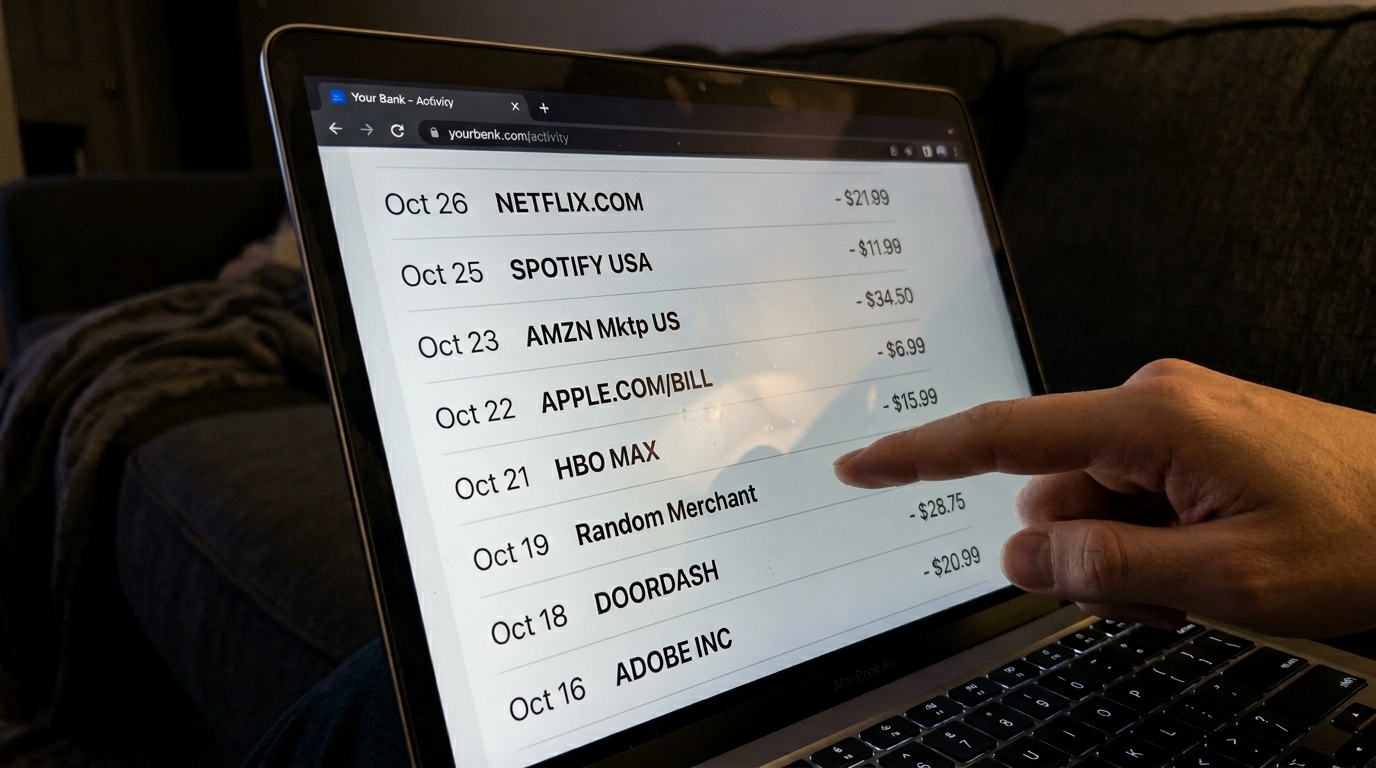
The fix is also consistent: a real look at three months of bank statements. What turns up is never one big problem. It’s thirty small ones. Subscriptions nobody remembers signing up for. Groceries that got wasted. Habits that got monetized without anyone noticing.

If you’re trying to figure out how to cut monthly expenses without feeling like you’re punishing yourself, this is the honest version of that conversation.

3.8%
US inflation rate, April 2026 (BLS)
2.3%
Food price increase year-over-year (BLS)
17.9%
Energy cost increase year-over-year (BLS)

According to the U.S. Bureau of Labor Statistics, the inflation rate hit 3.8% as of April 2026. Energy costs jumped 17.9% year over year. Food prices are up 2.3%. Your paycheck almost certainly did not keep pace with any of that.

The math got harder. That is not a mindset problem. That is reality. But there is real ground to reclaim if you know where to look.

The System

Start With the Audit You’ve Been Avoiding

How to cut monthly expenses

Before you can cut monthly expenses, you need to know where the money is actually going. Not where you think it’s going, where it actually goes.

Pull three months of bank and credit card statements. Categorize every transaction: fixed costs (rent, insurance, loan minimums), variable spending (groceries, fuel, dining), and subscriptions. Don’t judge yet. Just look.

Tool that helps

YNAB forces you to assign every dollar a job before you spend it, the most effective system for people who keep running out of money mid-month. Empower is better if you want a passive overview that also tracks investments. Both surface patterns your brain has been hiding from you.

Most people find at least two or three subscriptions they forgot about. Search your email for “receipt,” “subscription,” and “billing.” You will uncover charges that never made it into your mental budget.

01
Cancel anything you haven’t used in 60 days

No exceptions. If you genuinely miss it after a month, resubscribe, often at a promotional rate. These companies built monthly billing specifically because most people won’t cancel even when they’ve stopped using the service.

For streaming: rotate instead of stacking. Subscribe to one service for two months, cancel, move to the next. Most households running three to five streaming services simultaneously could cut two without noticing.

Groceries

How to Cut Monthly Expenses on Groceries

Food is where most household budgets quietly bleed, and one of the fastest places to cut monthly expenses. It’s not one big purchase, it’s a hundred small decisions made while hungry and distracted.

The grocery store is engineered to make you spend more. The fix isn’t willpower, it’s a system.

Every impulse buy was planned by someone else

02
Meal plan before you shop, every single week

Five dinners planned. A list written from what you actually need. The alternative is buying ingredients for three meals, cooking one, and throwing out the rest. Most households waste a significant amount of food this way before they start planning.

03
Switch to store brands on staples

Canned goods, pasta, rice, oils, frozen vegetables, cleaning products, paper products. Switch about 15 staples to store brand versions. The savings per shop are modest. Across a year they are significant. Most people can’t taste the difference on the majority of them.

Shopping tip

Check your fridge and cupboards before every shop. The single most effective way to stop buying duplicates of things you already have.

Bills

How to Reduce Monthly Expenses on Bills

04
Negotiate or switch your recurring bills

Most people pay the same rate for internet, phone, and insurance for years without questioning it. Providers regularly offer better rates to new customers. Your loyalty means nothing to them financially.

Call your internet provider and ask what their current promotional rates are. If they won’t match, mention you’re considering switching. Insurance is worth shopping annually, NerdWallet makes comparison fast.

05
Build a small emergency buffer

Not having a buffer makes everything more expensive. A car repair that hits when your account is at zero becomes credit card debt at high interest. That same repair with $500 set aside is just an annoying Tuesday.

Even $25 a week transferred automatically on payday adds up to $1,300 in a year. The key word is automatic, before you can spend it.

Where to keep it

High-yield savings accounts pay meaningfully more than traditional bank savings. Ally, Marcus by Goldman Sachs, and SoFi are solid options.

Switch From Monthly to Weekly Budgeting to Cut Monthly Expenses Faster

Monthly budgets are easy to blow in the first two weeks and spend the rest of the month rationalizing. A weekly variable-spend limit creates a tighter feedback loop that most people find easier to stick to.

Pick one number for all your variable spending: groceries, fuel, dining, miscellaneous. Reset it every Monday. If you blow it by Wednesday, you feel it by Friday. That friction is useful, it is information about your actual habits that a monthly budget hides from you.

Common mistake

Setting your weekly limit based on what you wish you spent instead of what you actually spend. Look at three months of real data first. The honest number will probably be higher than you expect.

Apps that make this easier

YNAB

Best for people who want a real system. Forces you to budget proactively rather than track reactively.

Empower

Better if you also want to track investments and net worth alongside spending.

Copilot

Clean iOS app with excellent visual breakdowns. Good for people who find YNAB too intensive.

Mistakes

Common Mistakes to Skip

01
Cutting everything at once after a bad month

Canceling six subscriptions and switching to meal prepping every Sunday in a single panicked weekend sounds productive. In practice, almost nobody keeps all of it going after two weeks. One change at a time sticks. Six at once doesn’t.

02
Ignoring the small recurring charges

Six things at $8 a month is $576 a year. Individual charges get dismissed as not worth worrying about. They absolutely are when you add them up.

03
Not automating savings

Saving whatever is left at the end of the month means saving nothing, because there is never anything left. Treating savings like a bill you pay on payday is the only version that works.

04
Budgeting based on optimism instead of history

Setting grocery budgets based on what you think you should spend, not what you actually spent. Real data changes behavior. Aspirational targets don’t.


You don’t need to live smaller. You need to stop funding things you don’t value.

Learning how to lower monthly bills and reduce monthly expenses isn’t about restriction, it’s about redirecting. Every dollar you stop spending on a forgotten subscription or an unplanned grocery run is a dollar that can go somewhere that actually matters. The system above isn’t complicated. The hard part is just starting the audit. Once you see the numbers, the decisions usually make themselves.

Once you have expenses under control, the next step is making your savings work harder. The best high yield savings accounts in 2026 are paying over 4% APY. If you want a simple system for making savings happen automatically before you spend anything, the pay yourself first method is the easiest starting point. And if you want more structure for how you spend what is left, the cash envelope method works well alongside any expense-cutting effort. Not sure which system fits your situation? This guide to choosing the right budgeting method will point you in the right direction.