Most advice on how to save money on food stops at the grocery store. Meal plan, buy store brand, use coupons. That’s real advice. But for the average American household, the grocery store is only part of the problem.
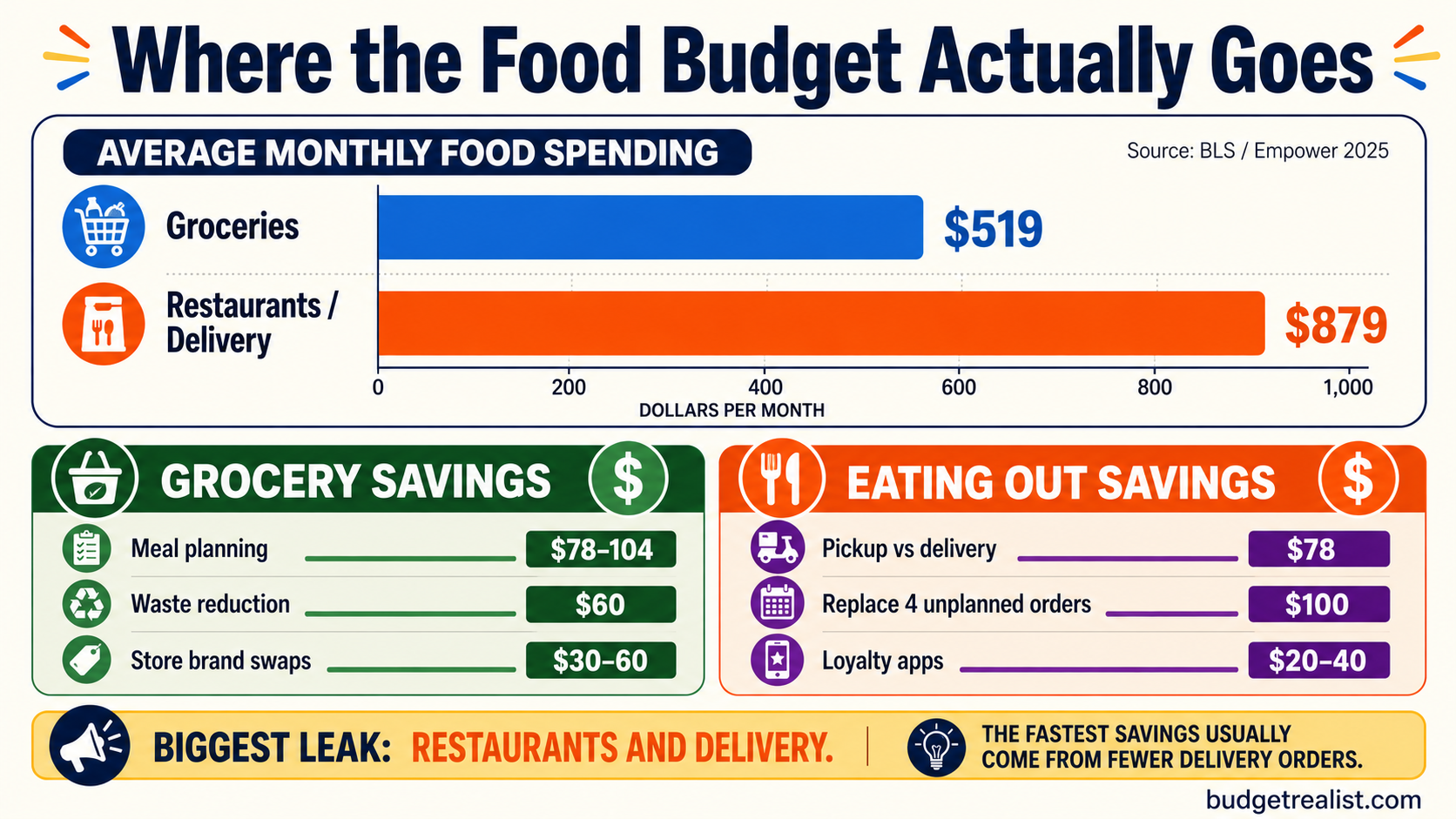
According to Empower Personal Dashboard data for the year ended August 2025, Americans spend about $879 per month at restaurants on average, on top of groceries. That’s more than $10,500 a year leaving the household through sit-down meals, takeout, and delivery fees.
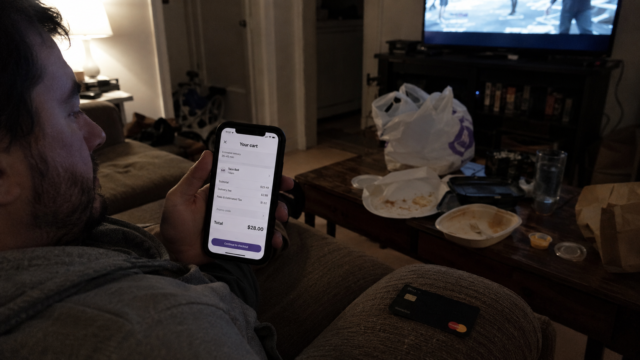
The grocery bill gets all the attention because it’s visible on the receipt. Restaurant and delivery spending is scattered across a dozen apps and credit card statements and it’s easy to lose track of what it actually adds up to.
Here are 8 changes that show you how to save money on food across the full budget, not just the cart.
How to Save Money on Food: Understanding Where It Actually Goes
Before cutting anything, look at the full number. Most people dramatically underestimate what they spend on food away from home because it’s fragmented across so many channels.
| Food Category | Average Monthly Spend | Source |
|---|---|---|
| Groceries (at-home food) | ~$519 | BLS Consumer Expenditure Survey 2024 |
| Restaurants, takeout, delivery | ~$879 | Empower Personal Dashboard, Aug 2025 |
| Total food spending | ~$1,398/month | Combined |
That $1,398 combined monthly figure is for the average household. For a single person it’s lower, but the ratio is often similar: grocery spending is the smaller half of total food costs, not the larger one.
This matters because most people trying to figure out how to save money on food focus entirely on the $519 grocery number and ignore the $879. The grocery store is already somewhat optimized for most households. The restaurant and delivery spending is usually running on autopilot with no system at all.
How to Save Money on Food Away From Home
Telling people to stop eating out is the personal finance equivalent of telling someone to just stop buying coffee. It ignores that eating out is social, sometimes necessary, and one of the few genuine pleasures in a constrained budget.
The goal is not elimination. It’s having a system so the spending reflects actual choices rather than passive drift.
Change 1: Set a monthly eating-out number and track it
Most overspending on restaurants is not the result of one expensive dinner. It’s a Tuesday lunch here, a Friday takeout there, a weekend brunch that felt reasonable in isolation and collectively added up to $400 before the month was half over.
Pick a number. Pull up last month’s bank statement and add up every restaurant, cafe, and food delivery charge. That real number is your starting point, not a judgment. Decide if it’s acceptable or not, then set the new target.
The act of tracking alone reduces spending. Not because of willpower, but because most of the drift happens in blind spots. When you know the running total, the Tuesday lunch becomes a conscious choice instead of a default.
Change 2: Shift from delivery to pickup
This is the single easiest way to save money on food without changing what you eat. Delivery fees and tips have pushed delivery prices nearly 80% higher than pickup for the same order from the same restaurant.
A $15 meal becomes $22 to $28 by the time DoorDash finishes adding service fees, delivery fees, and the tip prompt. Pickup orders grew 14% last year while delivery spending fell 12% as the math stopped working for more people. Most apps let you switch to pickup in one tap.
A $15 burger via DoorDash: $15 food + $3.99 delivery fee + $2 service fee + $3 tip = $23.99. The same burger picked up: $15 plus whatever you feel like tipping. That’s $9 saved on one order. At twice a week, that’s $936 a year.
Change 3: Stock three fast home meals for unplanned hunger
Most unplanned delivery orders happen when someone is hungry and there is nothing easy at home. The $28 Wednesday night order is almost never planned. It’s a failure of food availability at 7pm when cooking felt impossible.
The fix is keeping a small inventory of fast options: eggs, pasta, canned beans, frozen protein. Something that costs $2 and takes 15 minutes. This is not about becoming a meal prepper. It’s about having an exit ramp when the delivery app feels like the only option.
Change 4: Use restaurant loyalty apps at places you already eat
If you eat at the same places regularly, their loyalty apps are free money. Chipotle, Panera, Starbucks, McDonald’s, Chick-fil-A, Subway: all have apps with rewards, free items, and exclusive pricing.
47% of diners now use loyalty programs at least once a week, up from 34% in 2023. If you’re in the 53% who don’t, you’re paying full price while everyone else gets free food.
How to Save Money on Food at Home Beyond the Grocery Store
The grocery store is one part of at-home food spending. How you cook and what you do with what you bought determines whether the money you spend at the store actually feeds you or ends up in the bin.
Change 5: Cook once, eat three times
Batch cooking is the highest-leverage habit in a food budget. Not because it’s trendy, because the unit economics are dramatically better than cooking individual meals.
A pot of rice and beans feeds four for $3. The same calories from a restaurant feed one for $14. A large batch of chicken thighs roasted on Sunday costs $12 and covers lunches for three days for two people. The individual lunch order costs $12 per person per day.
You don’t need to prep like a fitness influencer. One batch item per week covers the most expensive meal in most budgets: the weekday lunch bought out of necessity because there’s nothing at home.
Change 6: Learn five cheap proteins
Protein is the most expensive line item in most grocery budgets and the biggest driver of restaurant spending. Knowing which proteins are genuinely cheap changes the math on cooking at home.
Eggs: $0.25 to $0.40 each, complete protein, cook in under five minutes. Canned tuna: $1.50 to $2.50 per can, covers a full meal. Dried lentils: $1.50 per pound, feeds four. Chicken thighs: $2 to $4 per pound consistently. Frozen shrimp: goes on sale regularly and cooks faster than anything else.
These are not punishment foods. They are the building blocks of most cuisines. The idea that eating cheaply means eating badly is a myth built by people who have never cooked with cheap ingredients properly.
Change 7: Freeze before it goes bad
Most food waste happens not because people bought too much, but because they didn’t act fast enough before something turned.
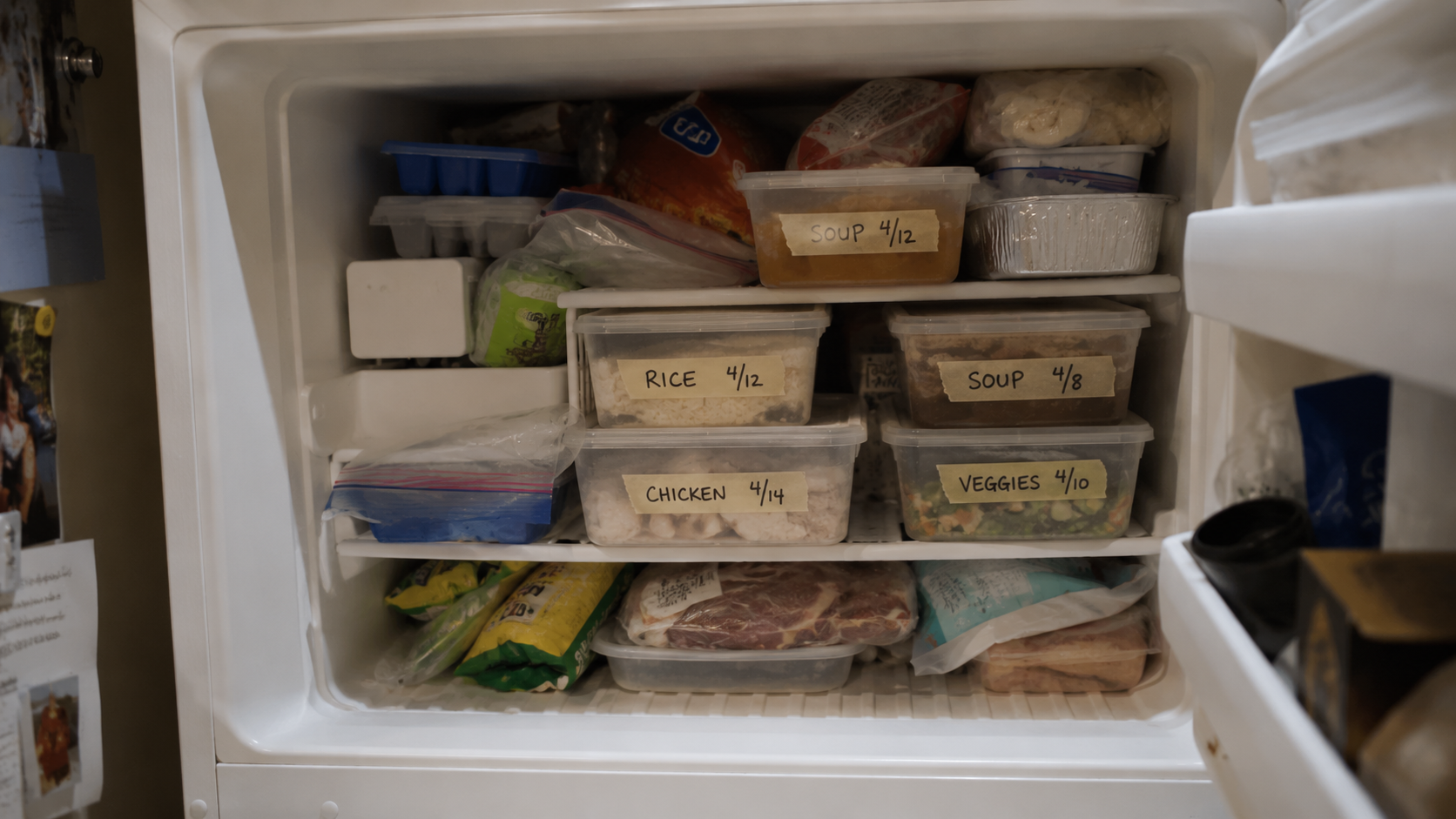
Bread going stale: slice and freeze. Bananas browning: freeze them. Leftover rice: freeze in portions. Chicken you won’t cook tonight: freeze before it goes off. A freezer used deliberately cuts the $60 per person monthly waste figure in half for most households, according to EPA estimates, adding $30 to $60 back per person with zero change to what you buy.
Change 8: Audit subscriptions and meal kit services annually
Meal kit services (HelloFresh, Blue Apron, EveryPlate) solve a real problem: decision fatigue around cooking. But they cost $10 to $15 per serving, which is restaurant territory for food you still have to cook yourself.
If you’re using one, calculate the actual per-meal cost and compare it to what you’d spend buying the same ingredients at the grocery store. For some households the convenience is worth it. For most, it’s a subscription that made sense when it started and has been quietly running on autopilot since.
How to Save Money on Food: Start With the Bigger Half
The grocery store is not where most households overspend on food. The $879 monthly average on restaurants and delivery is. Focusing only on grocery savings while the eating-out budget runs unchecked is like bailing out a boat while leaving the hole open.
Start with the eating-out audit. Set a number. Switch delivery to pickup. Stock three fast home meals. Those three moves alone are worth more annually than any amount of couponing at the grocery store.
Then layer in the at-home changes: batch cooking, cheap proteins, freezing before waste happens, and auditing any food subscriptions. Together these 8 changes are how a household genuinely reduces total food spending in a way that sticks.
If you want the grocery store side covered in detail, this breakdown of ways to save money on groceries covers the full shopping strategy. And once the savings are freed up, the pay yourself first method is the simplest way to make sure they go somewhere useful instead of dissolving back into spending.