
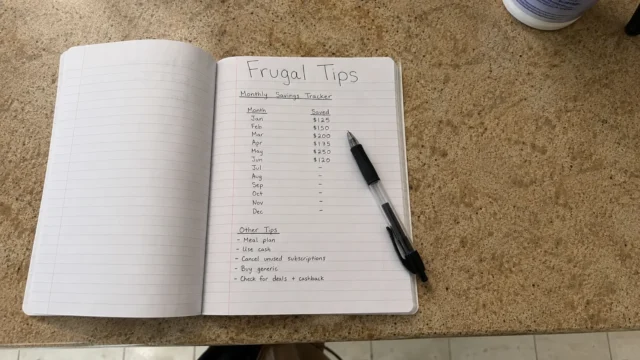
According to a 2026 BestMoney study, 83% of Americans now consider themselves frugal. Most of them are cutting clothing, entertainment, and groceries while their phone plan, insurance, and subscription bills run unchecked on autopay.
Being frugal and being strategic about it are different things. The first feels like sacrifice. The second produces results without the misery.
These frugal living tips are selected for actual dollar impact and, where possible, for being genuinely underreported. The ones every site already covers are here too, but ranked honestly rather than padded to fill a listicle.
Frugal Living Tips Ranked by What They Actually Save
1. Set a bill review date in your calendar once a quarter
This is the frugal living tip most people skip because it feels administrative rather than frugal. It is the highest-return item on this list. One afternoon per quarter reviewing your phone plan, insurance, internet, and subscriptions saves the average household $200 to $400 per month once the obvious overcharges are found and fixed.
Most of that money is sitting in bills that were set up years ago and never reviewed. The phone plan that made sense in 2022. The insurance that got quietly renewed at a higher rate. The gym membership from January. Set the date. Do the review. This single frugal tip saves more than all the grocery couponing on this list combined.
2. Use the 48-hour rule on every non-essential purchase over $30
Write it in a note instead of adding it to a cart. Come back after 48 hours. Buy it if you still want it. Most items do not survive the wait because the purchase impulse was driven by a momentary emotional state that passes.
The average American spends $282 per month on impulse purchases according to Capital One Shopping research. Cutting that by half with one rule saves $1,692 per year. This is one of the frugal living tips with the highest return for the least lifestyle change because it does not prevent you from buying things you actually want.
3. Switch your phone plan before doing anything else
Mint Mobile on T-Mobile’s network costs $15 per month for 15GB. Visible on Verizon’s network costs $25 per month unlimited. Most people are paying $60 to $100 per line per month for the same coverage. A two-person household switching saves $110 per month. The switch takes 30 minutes and the saving is permanent.
This is consistently the fastest frugal tip to implement and one of the largest single monthly savings available. It requires no behavioral change, just a different vendor for the same service.
4. Negotiate your rent before renewal, not after
Most renters accept whatever renewal number their landlord sends. Most landlords would rather give a discount than deal with a vacancy, which costs $1,000 to $3,000 in turnover. Research comparable units in your area before the renewal date. If the market rate is lower than your renewal offer, say so and ask for a reduction.
This frugal tip is underused because it feels confrontational. It is not. It is a business negotiation. The worst answer is no. The best answer is $100 per month off for asking a question.
5. Meal plan before every single grocery shop
Five dinners planned. A list built from those five dinners. Nothing bought that is not on the list. Research consistently shows households that meal plan spend 15 to 20% less on groceries. On a $519 monthly grocery bill that is $78 to $104 per month from a ten-minute habit.
This is one of the most proven frugal living tips in the personal finance literature and one of the least consistently applied because it requires doing something before the thing rather than during it. The planning is where the saving happens, not at the store.
6. Track food waste for one week before cutting the grocery budget
Most households trying to reduce food spending cut the budget before understanding where the leak is. The EPA estimates Americans waste $728 per person per year on food that gets bought and thrown out. For a family of four that is $242 per month in waste before a single spending decision is questioned.
Track what you throw out for one week, write it down, estimate the cost. Most households find $40 to $80 in monthly waste they had no idea they were generating. Cutting waste in half requires no budget reduction and no sacrifice.
7. Buy quality secondhand instead of cheap new
This frugal tip runs counter to the conventional frugal advice of always buying the cheapest option. A $40 cast iron pan from a thrift store lasts longer than a $40 nonstick pan from a discount retailer. A well-made secondhand jacket from ThredUp costs less than a cheap new one and outlasts it by years.
The frugal living principle here is not “buy used always.” It is “buy quality always, and quality secondhand is almost always cheaper than quality new.” Applied to clothing, furniture, tools, and kitchen equipment, this habit saves $30 to $100 per month for active buyers with no reduction in what you actually own or use.
8. Use a separate checking account as a spending envelope
This is one of the most underreported frugal living tips that actually changes behavior. Open a second free checking account. On payday, transfer your total discretionary spending budget for the month into it. When it hits zero, discretionary spending stops.
The separation creates a hard limit that a single account with a mental budget does not. When the money is visually gone, it is gone. Most people find this cuts overspending by 20 to 30% in the first month purely because the visual signal is clearer than a number in their head.
9. Shop your insurance annually, not just when something changes
The average saving when switching car insurance providers is $461 per year according to Bankrate’s 2025 analysis. That saving is available to most people every year because insurers build rate increases into renewals and offer better rates to new customers than loyal ones.
Set a calendar reminder 30 days before your policy renews. Spend 15 minutes getting three comparison quotes. Call your current insurer with the best quote and ask them to match it. Most will. If they won’t, switch. This frugal tip requires one hour per year and produces hundreds of dollars in annual savings.
10. Cook one batch item per week
One pot of grains, one batch of protein, or one large soup covers the most expensive meal in most budgets: the weekday lunch or dinner bought because there was nothing ready at home. A batch of chicken thighs costs $12 and covers lunches for two people for three days. The equivalent in restaurant meals costs $12 per person per day.
This frugal living tip does not require meal prepping like a fitness influencer. It requires one item per week cooked in bulk. That one habit eliminates $80 to $150 in monthly food spending for most households.
11. Use cashback apps only on items already on your list
Ibotta, Fetch, and Rakuten return real money on groceries, gas, and online purchases. The rule that makes them frugal rather than a spending trigger: only activate offers for items already on your list. The moment you buy something because there is a cashback offer on it, it stops being a saving.
Used correctly, Ibotta returns $10 to $30 per month on a normal grocery run with zero change to what you buy. Rakuten returns 1 to 15% on online purchases. Both are free and take five minutes to set up.
12. Cancel unused subscriptions, then set a rotation for the rest
The average American household spends $1,887 per year on subscriptions with $26.79 per month going to ones they don’t actively use. Cancel anything unused for 60 days. Then rotate the ones you keep: one streaming service for two months, then switch to the next one on the list.
You watch the same content on a longer timeline for a third of the cost. This frugal tip saves $80 to $200 per month from one audit that takes an hour.
13. Lower the thermostat by 7 to 10 degrees while sleeping
The EPA estimates this saves up to 10% on annual heating and cooling costs. On a $150 monthly energy bill in winter, that is $180 over a six-month heating season from one setting that takes 30 seconds to change on a programmable thermostat.
This is one of the frugal living tips that requires genuinely nothing: no shopping, no negotiating, no behavioral discipline during waking hours. You are asleep when it activates.
14. Build a sinking fund for every predictable large expense
Car registration. Annual insurance premium. Holiday gifts. Back to school. These are not unexpected expenses. They happen every year at predictable times. Most people treat them as emergencies anyway and put them on a card.
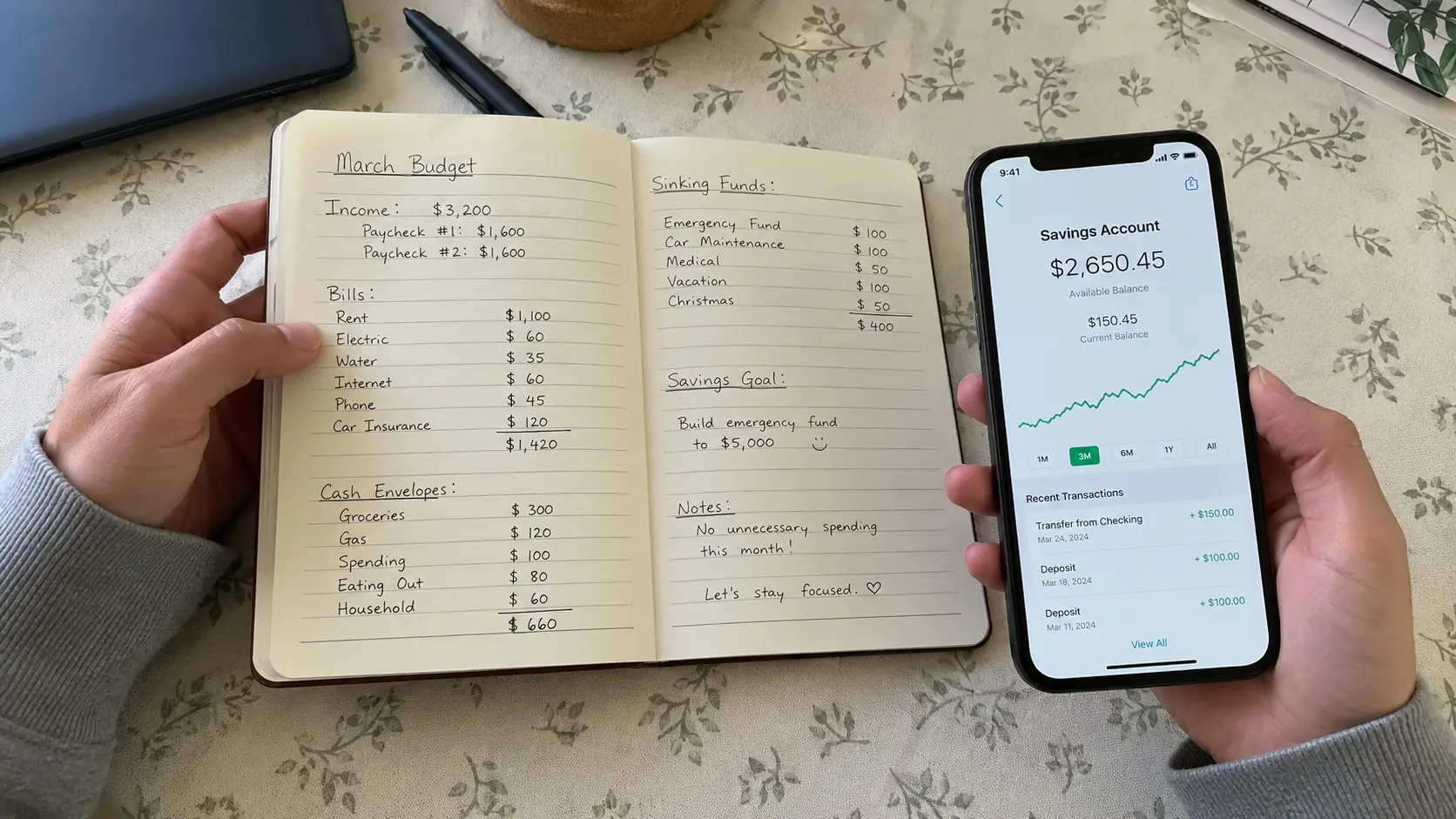
A sinking fund is a separate savings account or labeled bucket where you deposit a small fixed amount each month toward a known future expense. $50 per month produces $600 by December for holiday spending. $30 per month produces $360 for car registration. The expense does not change. How you experience it does.
15. Do a no-spend week once a quarter
One week per quarter where no non-essential purchases are made. No takeout, no clothing, no entertainment spending, no impulse buys. The week is not about permanent deprivation. It is a reset that recalibrates what feels necessary versus what is habitual.
Most people find they save $100 to $200 in the week itself and carry 20 to 30% lower spending into the weeks that follow because the reset exposed how much of their regular spending was automatic rather than intentional. This is one of the more unusual frugal tips because it is temporary and structural rather than ongoing and behavioral.
Which Frugal Living Tips to Start With
Not all 15 are worth doing simultaneously. The order matters.
Three frugal tips, all one-time actions, combined saving of $120 to $250 per month from day one. The phone switch and subscription audit alone cover more ground than six months of coupon clipping.
Call the insurance company with comparison quotes. Call the internet provider and ask for the retention rate. Start the meal planning habit. These three add another $100 to $200 per month and most of the work happens once.
Layer these in one at a time over the following month. Each becomes habitual quickly. The sinking fund requires opening one account and setting one automatic transfer. The batch cooking requires one additional item on the weekly grocery list.
Households that implement the first eight frugal living tips on this list typically reduce monthly spending by $300 to $500 within 60 days. Most of those savings come from one-time structural changes, not ongoing sacrifice. The remaining tips add compounding behavioral savings on top of that base.
Frugal Living Tips That Work Are the Ones You Keep Doing
The frugal living tips with the best track record are the ones that require a one-time decision or a simple weekly habit, not constant vigilance. The phone switch happens once. The subscription audit happens quarterly. The meal planning happens before the shop, not in the shop.
The frugal tips that fail are the ones that require you to be disciplined in the moment, every moment, forever. That is not a system. That is a willpower tax that eventually runs out.
Start with the structural changes. Let the behavioral habits follow once the big leaks are fixed. The goal is not to live smaller. It is to stop funding things that are not worth what they cost.
For a full breakdown of which frugal living strategies have the highest dollar impact, this ranking of frugal living hacks by actual dollar impact covers the numbers in detail. And if you want to make the savings automatic once they are freed up, the pay yourself first method handles that in one setup.