The average American spends $282 per month on impulse purchases, according to Capital One Shopping’s 2024 research. That’s $3,381 per year on things they never planned to buy. Nearly three-quarters of Americans say most of their purchases are unplanned, and 48% make online impulse purchases at least weekly.
Most advice on how to stop impulse buying treats this as a willpower problem. Pause before you buy. Ask yourself if you really need it. Sleep on it. That advice is not wrong, it’s just incomplete. It puts the entire burden on you while ignoring the fact that retail environments, app checkout flows, and social media feeds are professionally engineered by teams of psychologists and UX designers specifically to defeat your willpower.
You are not losing a fair fight. You are losing a rigged one.
The fix is not stronger willpower. It’s changing the environment so the fight doesn’t happen in the first place.
Why People Struggle With How to Stop Impulse Buying
Impulse buying is not random. It follows predictable patterns triggered by specific conditions. Understanding the triggers is the first step to neutralizing them.
The emotional trigger
Retail therapy is real. Stress, boredom, loneliness, and anxiety all increase impulse buying. The brain uses a purchase to generate a small dopamine hit that temporarily interrupts the negative feeling. It works in the moment. The problem is the $497 median spend on impulse purchases over $250, according to Q1 2025 data, and the 32% of consumers who have delayed a major financial milestone because of impulse spending.
The emotional trigger is the hardest to address with willpower because it fires before the rational brain catches up. By the time you’re asking yourself if you really need something, the emotional decision has already been made.
The design trigger
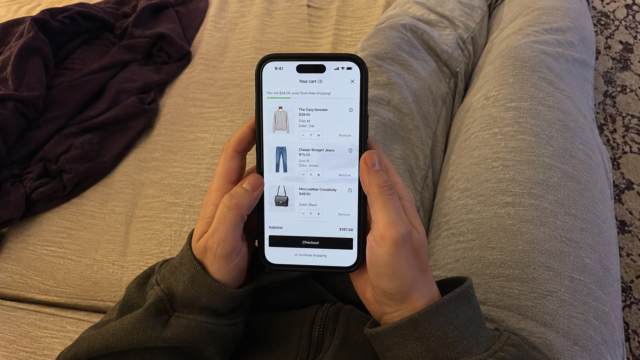
One-click checkout. Saved payment methods. Countdown timers. Low stock warnings. Personalized product recommendations based on browsing history. Free shipping thresholds that are just slightly above your current cart total. These are not accidents. They are conversion rate optimization tactics built to compress the time between impulse and purchase to as close to zero as possible.
Amazon’s one-click patent, held for 20 years, was specifically designed to eliminate friction from the purchase process. Every second of friction between impulse and checkout is a chance for the rational brain to intervene. Removing friction was the product.
The social trigger
48% of social media users have made an impulse purchase after seeing an ad on TikTok or Instagram. The #TikTokMadeMeBuyIt trend has over 6 billion views. Social proof, scarcity signals, and influencer endorsements all compress deliberation time. The algorithm knows what you clicked on last week and serves you more of it.
You are not bad at resisting temptation. You are a normal person being subjected to billions of dollars of behavioral research designed to make you spend money in the moment. Treating this as a personal failure misses the point and guarantees the same result.
How to Stop Impulse Buying: 7 Environmental Fixes
These fixes work by changing the environment rather than relying on in-the-moment discipline. Each one adds friction between the impulse and the purchase, which gives the rational brain time to engage.
Fix 1: Remove saved payment methods from shopping apps and websites
This is the single highest-leverage change most people can make. One-click checkout only works because your card is already saved. Removing it means every purchase requires you to physically find your card and type in the numbers. That 60 seconds of friction kills a significant percentage of impulse purchases because the moment of urgency passes before the transaction completes.
Go to Amazon, your most-used shopping apps, and your browser’s saved passwords. Remove the stored card details. You can still buy things. You just have to decide to do so with enough deliberation to get your card out.
Estimated monthly saving for average impulse spender: $60 to $120
Fix 2: Delete or log out of shopping apps on your phone
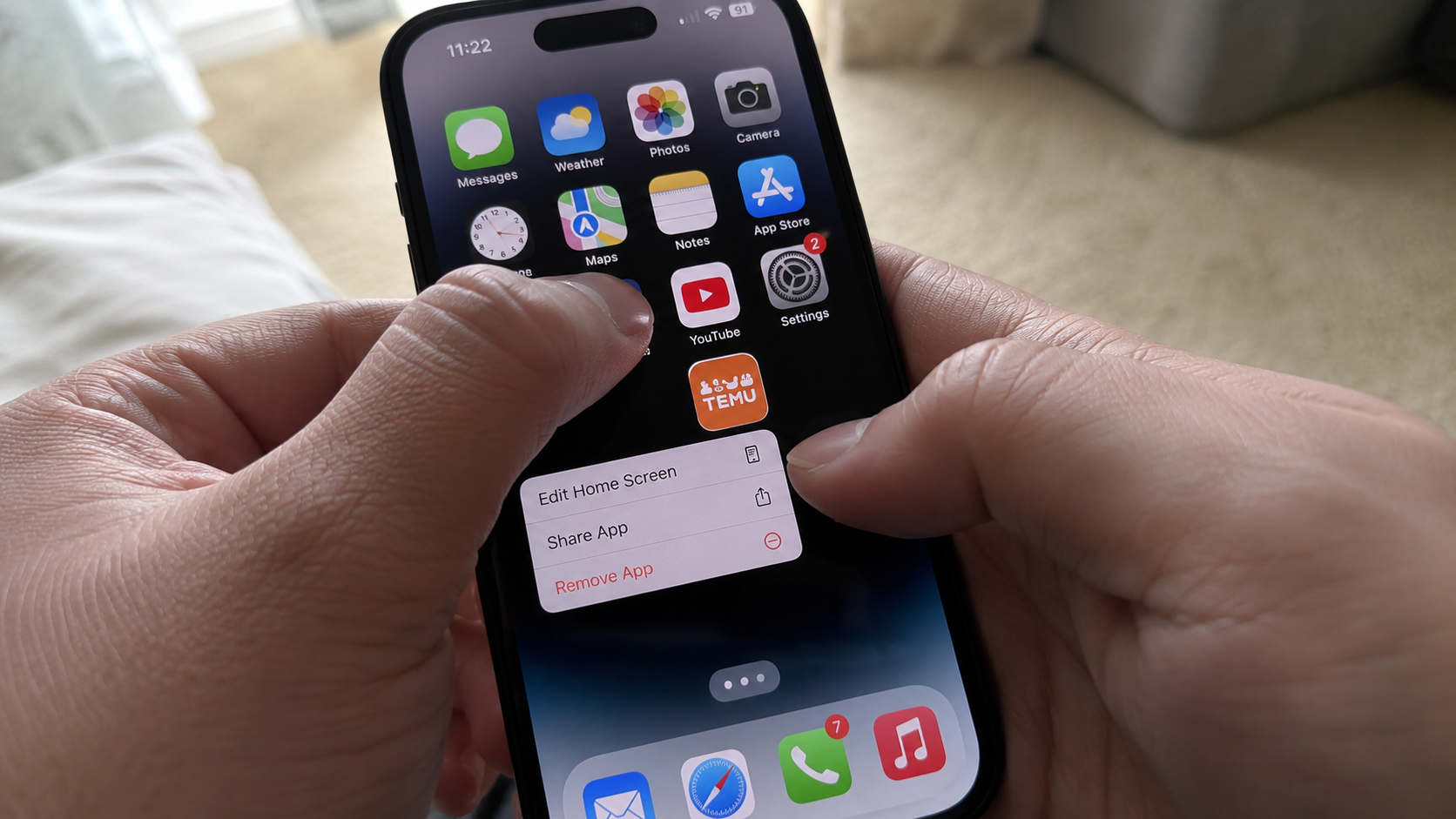
The apps are on your phone because convenience was the selling point. That convenience is also what makes them dangerous. Deleting the Amazon, ASOS, or SHEIN app from your phone does not prevent you from buying things. It means you have to use a browser, which is slightly more friction, which is enough to stop most impulse purchases that would have happened in idle moments.
If deleting feels extreme, log out of the app so every session requires a password. Most impulse buys happen when you’re already in the app for another reason. Requiring a login adds enough delay to disrupt the pattern.
What to do instead: Keep a wishlist document, physical or digital, where you write down things you want to buy. Revisit it after 48 hours. Most items lose their urgency within a day.
Fix 3: Unsubscribe from every retail email and SMS list
Promotional emails and SMS messages are designed to create urgency: 24-hour sale, last chance, only 3 left. Every one is a manufactured trigger. 72% of online shoppers have impulsively bought an item due to an advertised discount. The discount felt like a saving. It was a purchase that wouldn’t have happened without the email.
Use Unroll.me or your email provider’s unsubscribe tools to clear retail emails in bulk. Set a rule to automatically archive anything from a retailer before it hits your inbox. Out of sight, out of mind is not a cliche here. It’s a documented behavioral effect.
Estimated monthly saving: $30 to $80
Fix 4: Implement the 48-hour rule on all non-essential purchases
The 48-hour rule is simple: any non-essential purchase over a threshold you set (typically $30 to $50) goes on a list and waits 48 hours before you buy it. If you still want it after 48 hours, you buy it without guilt. Most items don’t make it past the wait.
This works because impulse buying is driven by immediate emotional states. Boredom at 10pm on a Tuesday generates a different purchasing decision than the same item reviewed at noon on Thursday. The 48-hour rule separates the emotional trigger from the transaction.
The key is writing the item down rather than adding it to a cart. Adding to cart keeps the purchase one click away and keeps the item visible. Writing it in a note removes the immediacy.
This single fix alone is responsible for the majority of reported success in how to stop impulse buying, because it interrupts the emotional trigger without requiring permanent deprivation.
Fix 5: Give every dollar a job before the month starts
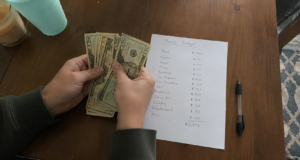
Most impulse buying happens with money that has no designated purpose. When a paycheck lands and $400 is sitting unallocated in checking, a $60 impulse purchase feels negligible. When that $400 has already been assigned to rent, groceries, and savings, the same $60 purchase is a visible breach of a plan.
Zero-based budgeting eliminates unallocated money by assigning every dollar to a category before the month begins. It doesn’t eliminate discretionary spending; it makes it intentional. A $60 entertainment budget is not an impulse. Spending $60 on something that wasn’t in any budget is.
Here’s how zero-based budgeting works on a real salary.
Fix 6: Block or mute high-trigger accounts on social media
You cannot stop the algorithm from knowing what you’ve previously engaged with, but you can reduce its surface area. Mute or unfollow accounts that consistently trigger purchase impulses: haul accounts, unboxing channels, brand accounts, influencers whose content is primarily product recommendations.
This is not about using social media less. It’s about curating your feed so it stops functioning as a product discovery engine operating against your financial interests. Replace product-focused follows with content that has no purchase call to action.
Fix 7: Build a small fun money budget so deprivation doesn’t backfire
Trying to eliminate all impulse buying without building in any discretionary spending usually fails. Deprivation increases the psychological value of forbidden items and makes the eventual break harder. A strict no-spend approach often ends in a compensation purchase that costs more than the gradual impulse buying would have.
Build a monthly fun money line into your budget: $50, $100, whatever is realistic. This money can be spent on anything, no justification required. Having a sanctioned spending category removes the emotional charge from small purchases and makes the budget feel sustainable rather than punishing.
The goal is not zero impulse buying. The goal is impulse buying that doesn’t happen with money you needed for something else.
How to Stop Impulse Buying This Week
Amazon, your most-used clothing site, and wherever you most often make impulse purchases. Takes ten minutes. Immediate effect on all future sessions.
Use Unroll.me or go through your inbox manually. Every retail email is a manufactured trigger. Remove them from the environment entirely.
Create a note called “Want to Buy” on your phone. Every non-essential purchase over $30 goes there with the date. Review after 48 hours. Buy it if you still want it. Most items will not survive the wait.
The average impulse spender at $282 per month who cuts impulse buying by 50% with these environmental fixes saves $1,692 per year. At 70% reduction: $2,368. These are not extreme targets. They are what happens when you remove the triggers rather than trying to resist them.
How to Stop Impulse Buying Is a Design Problem, Not a Willpower Problem
The retailers, apps, and platforms you buy from have spent decades and billions of dollars optimizing for your impulse. Trying to beat that with raw willpower is a losing strategy. Changing the environment so the impulse has nowhere to land is not.
Remove the saved cards. Delete the apps. Kill the retail emails. Start the 48-hour list. Build a fun money budget. Those five changes restructure the environment so that intentional spending becomes the default and impulse spending requires active effort instead of the other way around.
Once the impulse spending is under control, the next step is making sure the freed-up money goes somewhere useful. The pay yourself first method automates that automatically. And if you want a full picture of where your money is going before you start cutting, this guide to choosing the right budgeting method will help you build the system around it.