
Pay yourself first is the simplest budgeting strategy there is. The idea: before you pay your rent, your bills, or buy anything, you move a set amount into savings. Whatever is left is what you live on.
That’s the whole system. There is no tracking, no categories, no spreadsheet required. You automate the savings transfer on payday and spend the rest without guilt. The Consumer Financial Protection Bureau identifies automating savings as one of the most reliable habits for building financial stability, precisely because it removes the decision entirely.
Most articles stop there. They explain the concept and move on. But the two questions that actually determine whether this works for you get skipped almost every time: how much should you actually save, and where exactly does that money go. This article answers both, with real numbers.
Pay yourself first means savings come out of your paycheck before you spend anything. You treat savings like a bill you pay on payday, not an afterthought at the end of the month. Automate it so it never sits in your checking account waiting to be spent.
How Much Should You Pay Yourself First?
The standard advice is 20% of take-home pay. That number comes from the 50/30/20 rule and gets repeated constantly. It is a reasonable target. It is also completely useless as a starting point for most people who are living paycheck to paycheck.
Here is a more honest breakdown based on where you actually are, not where a personal finance blog thinks you should be.
| Your situation | Realistic starting point | Target to build toward |
|---|---|---|
| No emergency fund, living paycheck to paycheck | $25 to $50 per paycheck | 5% of take-home |
| Some savings, covering bills but not growing | 5% of take-home | 10 to 15% |
| Stable, building toward goals | 15% of take-home | 20%+ |
| High income, aggressive wealth building | 20% of take-home | 25 to 30%+ |
The number that matters most is not the percentage. It is whether you actually do it consistently. A $50 automatic transfer that happens every payday without fail will build more wealth over two years than a $500 transfer you do some months and skip others.
Start at a number that does not hurt. Then increase it by 1% every three months. Most people do not notice a 1% reduction in spending money. Over a year that becomes a 4% improvement in your savings rate without a single painful sacrifice.
Do not set your pay yourself first amount so high that you end up transferring it back mid-month to cover bills. That defeats the entire system and trains your brain that the savings account is just a temporary holding tank. Start lower than you think you need to.
Where Does the Money Actually Go?
This is the question that gets the vaguest answers. “Put it in savings” is not a plan. Here is a specific order of priority for where your pay yourself first money should go, in sequence.
Priority 1: One month of expenses as a cash buffer
Before anything else, build one month of essential expenses in a regular savings account. Not an investment account, not a high-yield account you have to wait a few days to access. Somewhere liquid and boring. This is your circuit breaker. Once you have it, you stop pulling from credit cards every time something breaks.
Priority 2: Employer 401k match, if you have one
If your employer matches 401k contributions up to a certain percentage, contribute at least enough to get the full match before anything else. That match is an immediate 50% to 100% return on your money. There is no savings account on earth that beats it. If your employer does not offer a match, skip this and move to Priority 3.
Priority 3: High-yield savings account for your emergency fund
Once the cash buffer exists and the 401k match is captured, build your emergency fund to three to six months of expenses in a high-yield savings account. The difference between a regular savings account and a high-yield one is meaningful over time. As of mid-2026, top high-yield savings accounts are paying around 4 to 5% APY versus the national average of under 0.5% for standard savings accounts.
Priority 4: Other goals in order of timeline
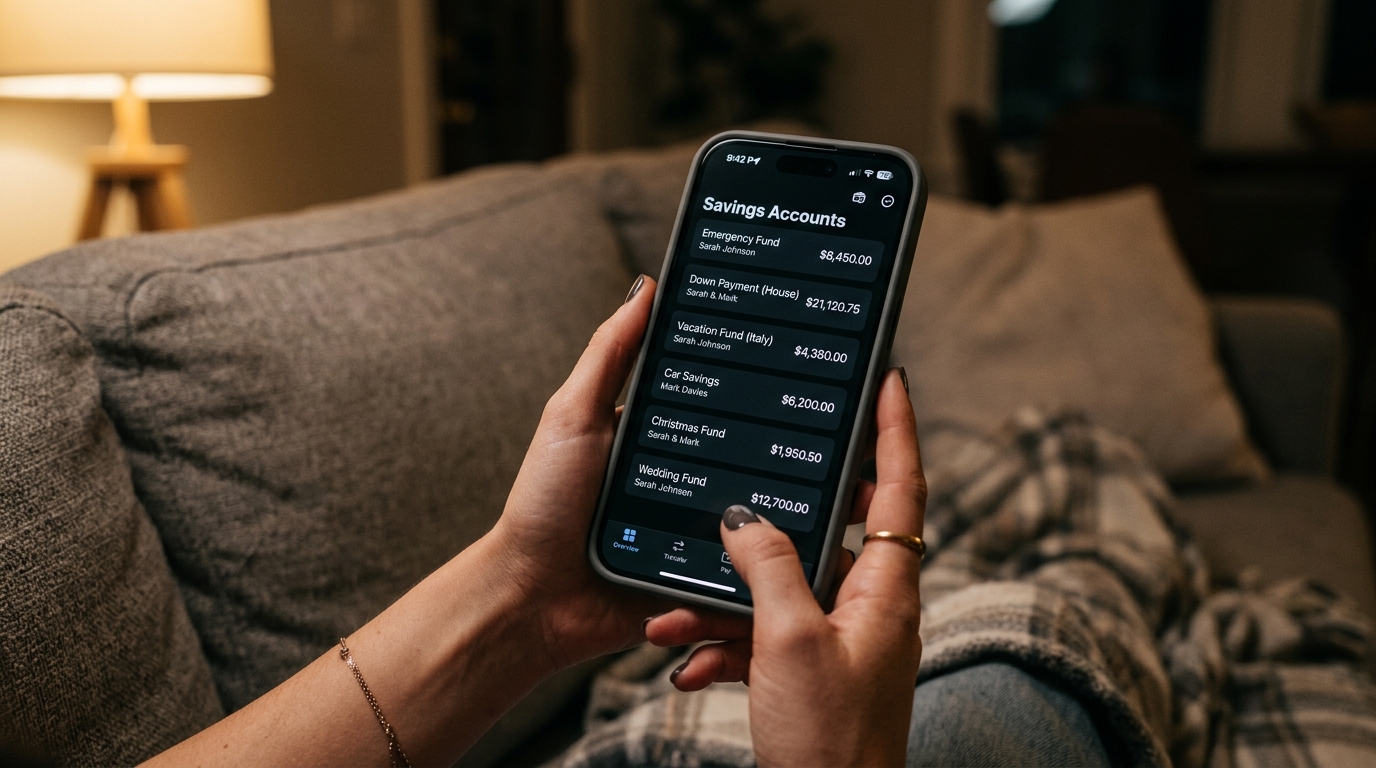
After the emergency fund is funded, your pay yourself first money splits toward whatever comes next: a house down payment, paying off high-interest debt faster, a Roth IRA, or general investing. The specific destination depends on your goals and timeline. What matters is that you have a named account for each goal and the transfer is automatic.

Pay Yourself First: The Honest Pros and Cons
Most guides only list the pros. Here is the full picture.
| What works well | What can go wrong |
|---|---|
| Removes willpower from the equation entirely | If the amount is too high you raid savings mid-month |
| Works without tracking or categorizing spending | Does not tell you where the rest of your money goes |
| Savings grows even in bad months | High-interest debt can grow faster than savings if not addressed |
| Easy to automate and forget about | Irregular income makes it harder to set a fixed amount |
| Low mental overhead compared to detailed budgeting | Not enough on its own if spending is genuinely out of control |
The biggest real disadvantage is the one most guides bury: if you are carrying high-interest credit card debt, paying yourself first into a savings account earning 4% while carrying a card charging 22% is a net loss. In that situation, “paying yourself first” means paying down the high-interest debt first before building savings beyond the one-month cash buffer.
If you have high-interest debt above 8 to 10% interest, direct your pay yourself first amount toward that debt instead of savings, after building one month of cash buffer. Eliminating a 22% credit card is a guaranteed 22% return. No savings account beats that.
How to Set Up Pay Yourself First in 20 Minutes
Step 1: Decide your starting amount. Use the table above. If you are unsure, start with $50 per paycheck and adjust after 60 days.
Step 2: Open a separate savings account if you do not already have one. Keeping savings in the same account as spending is how it disappears. A separate account with a slight friction to access it, like a different bank, works best for most people.
Step 3: Set up an automatic transfer for your payday, the same day your paycheck hits. Most banks let you schedule recurring transfers in the app in under five minutes. Set it and leave it.
Step 4: Do not look at the savings account balance more than once a month. The less you watch it the less tempted you are to move it back.
Step 5: Increase the transfer by 1% of your income every three months until you reach your target rate.
If you want a budgeting method that pairs well with pay yourself first and gives you more structure for the money you keep, the cash envelope method works well alongside it. Pay yourself first handles savings automatically. The envelope method handles what you spend what remains.
Is Pay Yourself First Right for You?
It is the right starting point for almost everyone who finds detailed budgeting overwhelming. If tracking every category sounds like something you will do for two weeks and then quit, pay yourself first gives you most of the benefit with almost none of the friction.
It is not the right system on its own if you have significant high-interest debt, if your income is irregular, or if your spending is so uncontrolled that you regularly overdraft after the savings transfer. In those cases it needs to be paired with something that addresses the spending side, not just the savings side.
For most people starting from zero, the honest answer is: automate $50, watch it work, increase it when you can, and stop overthinking the rest.